75% of Bella Vista Is on Septic, Not Sewer
Author
Phillip Shepard
Date Published
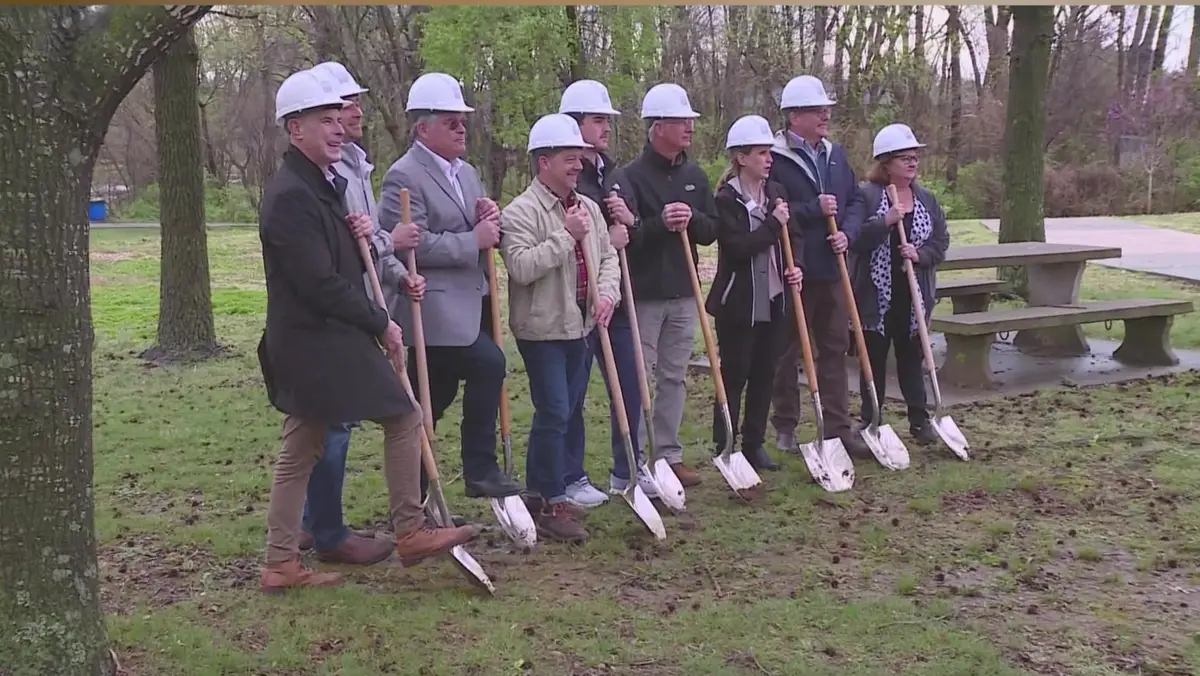
I had the sewer number backwards, and the correction makes my own argument stronger. In this video — and in the one-minute version I cut from it — I said "only 75% of Bella Vista has sewer," and built a case that a 40-unit apartment complex is close to unrepeatable there.
Roughly 75% of Bella Vista homes are on septic, not sewer. Only about a quarter have sewer access. Bella Vista is 5.2% of Benton County by land area and holds something like 58% of the county's permitted septic systems.
So the infrastructure constraint I described is real and considerably more severe than I made it sound. That's the good news for my thesis. Almost everything else in the video needs fixing.
"Just broke ground" — it opened
The project is Cottage Lane Village Apartments, 40 units on 2.69 acres at 1900 Cottage Lane, off Forest Hills Boulevard just south of Lancashire, near the Boys & Girls Club and the Public Safety Building. Five two-story buildings, eight units each. Every unit is a 2-bed, 2-bath at 873 square feet with a patio or deck. Total cost $8 million — I had that right.
Groundbreaking was July 30, 2024. Not "just." That's about a year before I filmed, and the property is now built and leasing.
The developer, owner and manager is Community Development Northwest Arkansas — I called it "the Community Development of Northwest Arkansas," close enough, and I was right that it's a nonprofit. What I underestimated is the organization. It started in 1991 as a housing initiative of the Bentonville/Bella Vista Chamber of Commerce and now owns and operates more than 350 rental units across affordable, senior, workforce and assisted-living housing. Cottage Lane Village was its third groundbreaking of 2024 alone.
I said "they are definitely a smaller organization, so I think this is like one of their bigger projects," and disclosed that I'd talked to the people who run it. Fair disclosure, and I'll keep it — but 350-plus units and three groundbreakings in a year isn't a group taking a flyer on something new. They already own The Cottages at Highlands Crossing, twenty senior cottages, directly across the street at 1903 Cottage Lane.
It isn't low-income housing
I called it "a 40 unit low-income housing apartment complex" and framed the whole thing as an experiment in whether "low income housing is going to benefit Bella Vista."
It's mixed-income, and the distinction is substantial:
- 11 units are reserved for households under 50% of area median income — AMI was cited at $94,400 for a family of four in 2024, so roughly a $47,200 ceiling. Those rent at $725 a month, underwritten by the Arkansas Development Finance Authority and the Walton Family Foundation. They accept Housing Choice Vouchers but don't require them.
- The other 29 units are priced around 80% of regional median — workforce rates, a moderate discount off market.
No source describes this as a Low-Income Housing Tax Credit deal. Twenty-nine of forty units are workforce-rate apartments. "Low-income housing complex" carries a specific meaning to most people hearing it, and that isn't what got built.
Who was actually involved
In the short version I said "the Northwest Arkansas Council got involved and they really wanted to start experimenting."
The funding partners were Arvest Bank, the Walton Family Foundation, and the Arkansas Development Finance Authority. Duke McLarty, who runs Groundwork — the Council's workforce-housing initiative — did speak at the groundbreaking, and said something worth quoting because it's the real explanation for why projects like this are rare: "It's really hard to create anything that's affordable these days. You just need multiple pots of money to pull from that are inexpensive capital to include any level of affordability."
That's an endorsement and an ecosystem role — advocacy, not sponsorship. "Got involved" is loose enough to cover it, but the way I paired it with "they really wanted to start experimenting" made it sound like the Council's project. It wasn't.
The land question — my hedge was right, and I'll leave it hedged
I said: "I believe Bella Vista gifted them land. I couldn't find record of that, but I did look up the actual records... and it seemed like Cooper Communities owned it and then gifted it to them, or they're building it on the land and then they're renting the land back. I'm not sure how it played out."
That's how uncertainty should sound on camera, and I'm not going to correct a hedge I got right. I'll only confirm it: no public source states who owned or conveyed those 2.69 acres, or on what terms. Cooper Communities does have a documented history of donating Bella Vista land with reversionary deeds — the Historical Museum site in 2000, for instance — so the mechanism is plausible. And the nonprofit already owned the parcel directly across the street, which points toward a pre-existing land position rather than a fresh gift.
Settling it would take a deed search at the Benton County Circuit Clerk. Until someone does that, it stays a question.
The sewer system wasn't built for the Waltons
This is the second sewer error and it's a bigger one than the percentage.
I said "the reason the sewer system was developed was because of the commercial that was actually being developed in the center of Bella Vista. So once the Waltons build out that main section, they have all the commercial down there — that is really the more use case for the sewer system."
The chronology rules that out entirely:
- Cooper Communities built the system as part of the original planned community starting in 1965
- By 1971, Cooper's construction division had laid 11¾ miles of sewer and water line
- Cooper sold the treatment facilities to the Bella Vista Townhouse Association in 1992
- Village Wastewater Company was created in 1996
- The City of Bella Vista didn't incorporate until 2007
The system predates the city by four decades and any modern commercial buildout by longer. It's also not run by the city or the POA — the POA handles water, and wastewater is Village Wastewater Company, a private nonprofit utility on Bella Vista Way, whose stated mission includes expanding the existing infrastructure. I couldn't find a published capacity figure, buildout target or sewer master plan anywhere, which is worth saying out loud: nobody watching this, me included, can put a number on how far that system will actually extend.
Is the new complex on sewer? I said "I don't believe this is connected to sewer." No source states it either way, but two things point strongly to sewer: Bella Vista adopted an ordinance in 2023 requiring connection where sewer is available rather than allowing new septic, and 40 units on 2.69 acres in a developed corridor isn't plausibly septic-served.
On the septic constraint itself — "you can't do a lot of 40-unit apartment complexes with a septic system... it just takes too much land" — the conclusion is sound but the mechanism is more regulatory than spatial. Above a certain daily flow, a system stops being a routine county health-unit septic permit and becomes a state subsurface wastewater permit with engineered design. A 40-unit two-bedroom complex would generate several thousand gallons a day, comfortably into that territory. Add drainfield area on steep, rocky karst terrain and you have a genuinely hard problem. I've seen a specific gallons-per-day threshold cited but couldn't confirm it, so I won't put a number on it.
The POA question I raised and didn't answer
I said "I am curious to see how they pay for the monthly dues in Bella Vista. That'll be curious. I'm not sure how that's going to shake up."
Here's as far as I can take it, with a real caveat at the end.
Assessments are $45 a month improved and $17 unimproved as of March 1, 2026, up from $40 and $16, after a member vote in 2025.
The 1965 Declaration and Protective Covenants assesses per "Lot or Living Unit," and defines a living unit as any portion of a building intended for occupancy as a residence by a single family — with a "multifamily structure" being a building containing two or more living units on one parcel. Assessments are a charge on the land and a continuing lien.
Reading that as a layman and not a lawyer, the definitions would appear to point toward a per-apartment assessment rather than one flat charge for the parcel — which at forty units would run somewhere near $1,800 a month as an owner's operating expense rather than a bill landing in a tenant's mailbox. I want to be clear that's my reading of a sixty-year-old document, not a legal opinion and not something the POA has confirmed to me.
On amenities: privileges attach to ownership, and the POA has the right to limit members per lot or living unit — currently capped at two designated members each. If the cap applies here, each unit could carry up to two people with amenity access, with the owner deciding who's designated. That would be a management policy question rather than a covenant one.
The caveat that undoes all of it: I could not confirm the parcel is inside "The Properties" subject to that Declaration. Property enters the POA through the original tracts or a recorded supplemental declaration, and commercial-corridor land retained by the developer isn't automatically in. If it's outside, the assessment question is moot and residents get no amenity access at all. Anyone actually weighing a lease there should ask the POA directly rather than take my reading of a 1965 document.
Which, awkwardly, matters for my amenity argument. I said putting affordable housing next to Bella Vista's golf courses, pools, pickleball courts and trails "is kind of a makes-sense idea." It is — if the residents can use them. I never checked whether they can.
"They were sweet talked into it"
This is the claim I'd most want back.
I said "Bella Vista has really no interest of doing that. I think they were kind of sweet talked into allowing this to happen, because I've seen no indicators that Bella Vista wants this to continue."
Mayor John Flynn attended and spoke at the groundbreaking. What he said: "It's important to have places where people can afford to live. A lot of times it's waitresses, firefighters, police, all kinds of different occupations people have, they still may need affordable housing."
That's not acquiescence. And it isn't a one-off:
- Comprehensive Plan 2040, adopted by City Council on September 28, 2020, names diversifying housing as a high-priority goal.
- September 22, 2025, the city adopted a rewritten zoning and development code whose concrete result was creating multifamily zoning districts where Bella Vista previously had none — including an R-2 moderate-density district for small-lot detached, attached and townhome housing.
- The 2023 sewer ordinance requiring connection where available rather than permitting new septic is a pro-density infrastructure posture.
A city with no interest doesn't adopt a plan calling for housing diversity and then rewrite its zoning code five years later to permit the exact housing type in question.
I also don't have the receipts I implied. I said I'd "seen no indicators," which reads as though I'd looked. I found no record of a contested council or planning vote on this project, no vote margin, and no documented public comment. It's possible it needed no discretionary approval at all if the site was already zoned for it — which would explain the silence. Either way, "sweet talked" attributes a motive to the city and its officials on the strength of an absence.
And in the short I said "the people who are living in Bella Vista would just put that out there right away, like, ain't going to happen." I don't have evidence for that either. I was speaking for a city of residents I hadn't polled.
What holds up
"They really haven't built any for a long time." Correct, and confirmed independently — Cottage Lane Village is described as the first new multifamily community in Bella Vista in many years, in a city Axios describes as "made up almost entirely of single-family homes." Homeownership runs about 88%. My decade-by-decade version — townhomes "built back in the '70s, '80s and '90s and in the 2000s," which "kind of stopped around the '90s" — contradicts itself, and I couldn't verify any of it. Treat that as impression.
The land-cost argument. "You can't really do this in Rogers or Bentonville per se, because the land is just too expensive." That's sound. Cheap land is a real part of why the deal pencilled here.
"I don't think it's going to change too much." Probably right on the arithmetic — 40 units against a city permitting 636 homes in 2024 and 349 in the first five months of 2025 is small. But the zoning rewrite means the next one won't need the same amount of improvisation.
And the case for it is stronger than I let on. Bella Vista's median household income is around $84,000. The median home sale price is around $380,000, up nearly 8% year over year. At the standard 28% guideline you'd need roughly $87,000 a year to comfortably buy the median home — more than the median household here earns. The city's typical household can't comfortably buy the city's typical house.
That's the context for eleven units at $725 a month aimed at people earning under about $47,000. Not an experiment being run on Bella Vista. A response to a gap in it — and, per the mayor, aimed at exactly the waitstaff, firefighters and police the city already employs.