Centerton's 833-Acre Downtown Plan, Explained
Author
Phillip Shepard
Date Published
Don't Move to Centerton Until You See This Plan
Centerton has adopted a master plan for a downtown it does not have yet: a new town center of roughly 833 acres, to be built on open farmland south of Centerton Boulevard. It is one of the biggest pieces of Northwest Arkansas news that almost nobody is talking about, and if it gets built it changes the calculation for anyone deciding where to live in NWA. Here is what is in the plan, what it gets right, and the problems Centerton still has to solve.
1. The Plan Doubled in Size
When this first surfaced in 2025, the figure was around 400 acres. The plan now covers roughly 833 acres for a new town center south of Centerton Boulevard, plus redevelopment of about 130 acres of the existing downtown to the north. That is not a tweak. That is a city deciding to build a downtown at regional scale.
The firms Garver and ISG prepared the plan and presented the final draft in August. The City Council adopted it in September on a 6–0 vote. Adoption is not funding, though — this is a vision document, and no construction has been approved or paid for.
The layout it describes:
- About 10 blocks of three- to six-story buildings
- A walkable core sized to roughly a 10-minute walk
- Roundabouts rather than standard signalized intersections
- A core of about 40 acres inside the larger footprint
Centerton has earned the ambition. Census estimates make it the fastest-growing city in Arkansas among cities of at least 20,000 people for three years running, reaching 27,176 residents in 2025. It went from almost nothing to a real city very quickly.
2. The Problem It Solves
Centerton's weakness has always been character. The housing is affordable and Bentonville is close, which is a real argument for living there. But there has been no downtown, not much of a trail system, and not much reason to stay in town on a Friday night. "You can live in Centerton, but…" is the sentence the city is trying to erase.
The plan answers that directly, and the theme is a smart pick: concerts, markets and nights out. Bentonville has to balance First Friday, families, tourists and a museum campus. Fayetteville has the university. Arguably nobody in NWA has claimed the night out yet.
What the plan describes for the core:
- A central garden of roughly two acres
- A shell stage on a lawn for concert series and movie nights
- Pop-up markets, food trucks and string-lighting canopies
- Natural playgrounds and an entertainment district
- Later business hours
The stated goal is that residents do not have to leave town for fun. That is the whole point of having a town.
3. The Land Is the Hard Part
Here is the elephant in the room: that land is not great land. It is fine for farming and for houses, but the area has flooding constraints, and the plan calls for floodplain-sensitive design. Raising ground, lowering ground, retention ponds — that is engineering money spent before a single storefront exists.
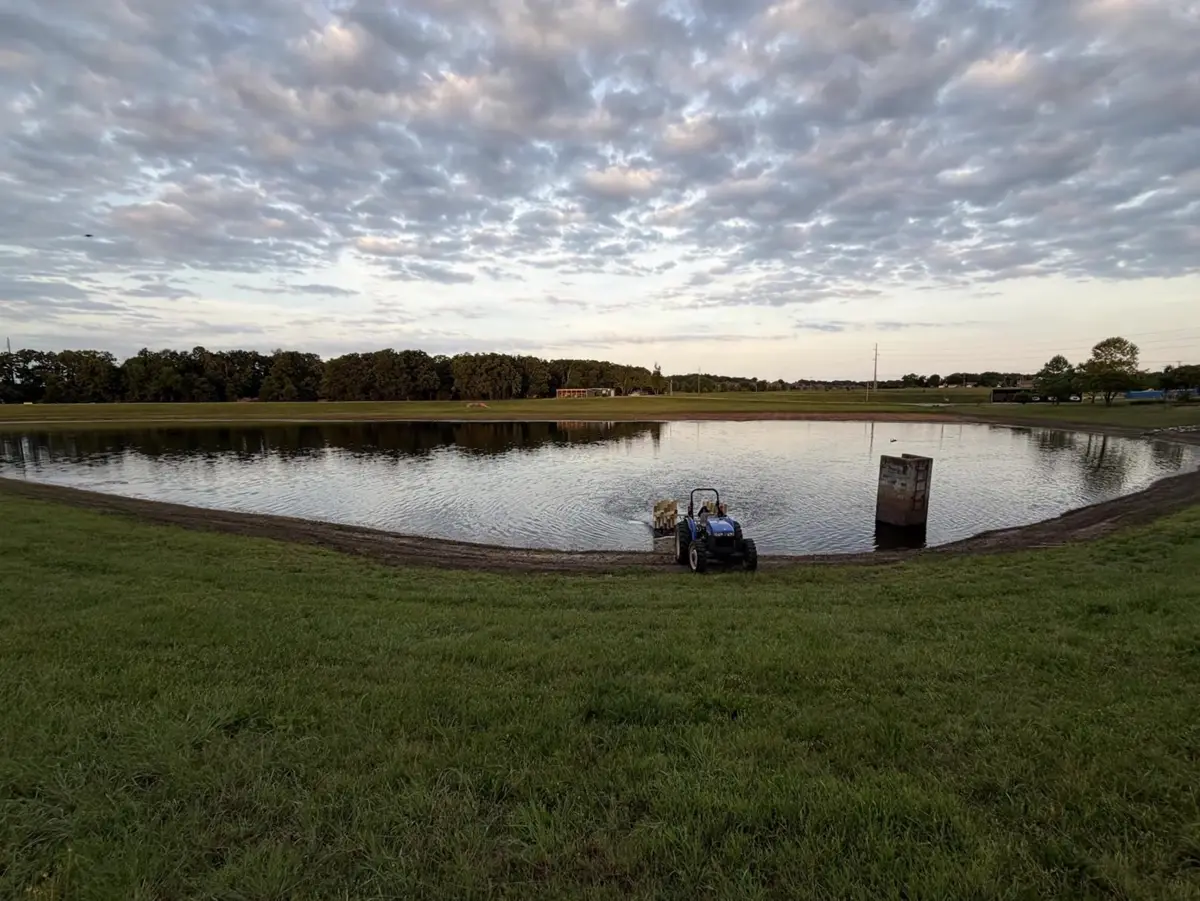
There is also a fish hatchery next door. The C.B. "Charlie" Craig State Fish Hatchery, run by the Arkansas Game and Fish Commission, is already a well-known birding spot, and the plan treats it as an asset — bird watching, fishing and water features as part of the downtown's identity. That is more interesting than the standard approach, and harder.
The other must-solve is trail connectivity. Centerton needs its new downtown tied into the Razorback Greenway, the regional trail that links Bella Vista, Bentonville, Springdale, Johnson, Lowell, Rogers and Fayetteville. The plan includes wide trails running from downtown Centerton to Bentonville. Spending this much and not connecting to the regional network would be a strange choice.
4. What It Means, and When
If Centerton pulls this off, it is one of the bigger wins in Northwest Arkansas — not as headline-grabbing as a medical school or a hospital, but more directly felt day to day. It removes the "but" from living there, and it gives people working at Walmart, J.B. Hunt, Tyson and the businesses around Pinnacle Hills another place worth living.
The timeline is the sobering part. The plan's own phases run roughly like this:
- Next zero to two years: studies and design standards
- Three to five years: roads, sewer and trails
- Six years and beyond: the full build-out
Funding still has to be found, which likely means a public vote, and the plan is explicit that it will need public-private partnerships. A realistic estimate for something like this is five years, probably closer to seven.
So there is no reason to rush a decision on Centerton because of this plan, and no reason to write the city off either. What it tells you is where Centerton intends to go. For anyone weighing NWA cities on a long horizon, that intent is worth knowing now, while the housing there is still the affordable option.