82% of Fayetteville Is Within a Half Mile of a Trail
Author
Phillip Shepard
Date Published
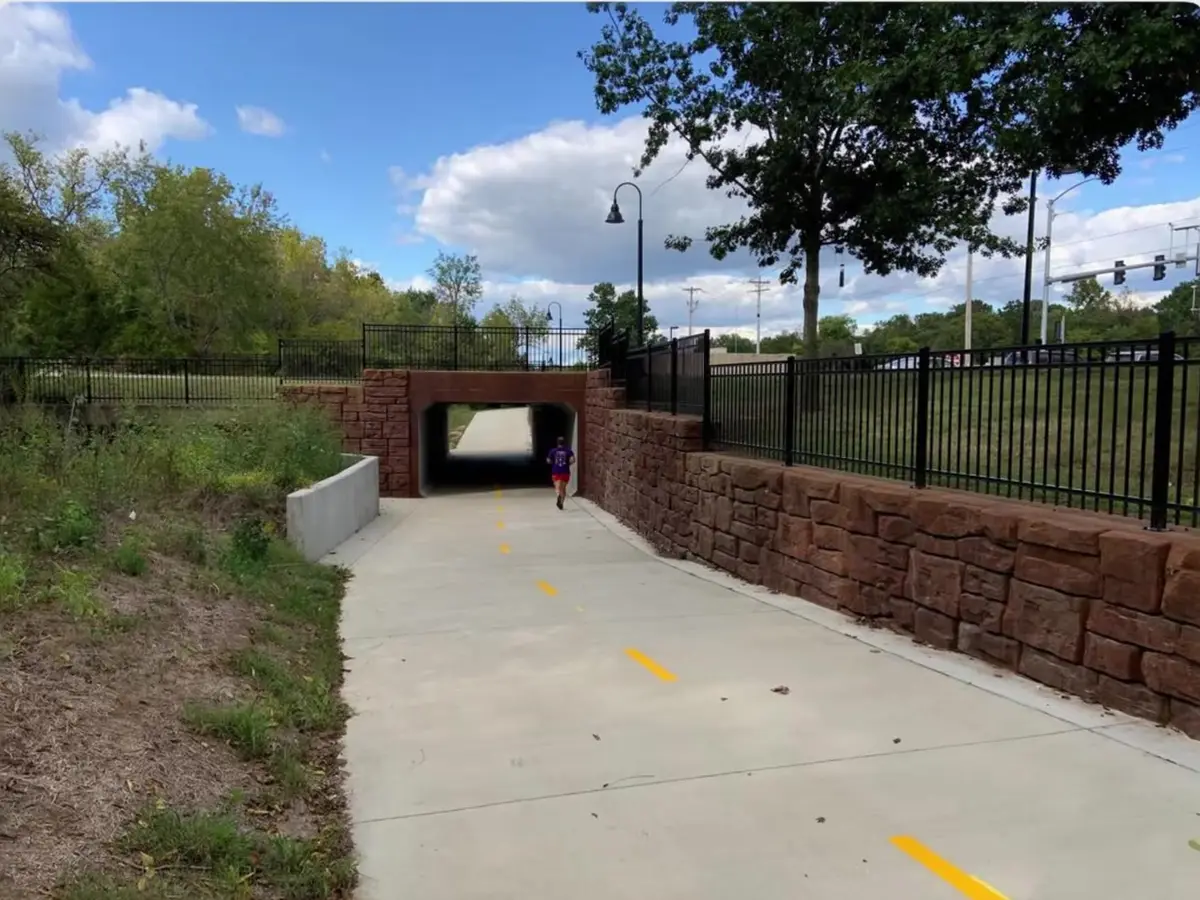
82% of Fayetteville Lives Within a Half Mile of a Paved Trail
The City of Fayetteville reports that 82 percent of residents now live within a half mile of a paved trail, as of its 2025 Pedestrian and Bike Shed Map. I have been saying "over 80 percent," which undersells it.
The trajectory is the more impressive number. When the city adopted its Active Transportation Plan in February 2023, the figure was 63 percent. The target is 97 percent by 2040 — stated as building a paved trail connection within a ten-minute walk of every residence.
Here is how they got there, and what I got wrong about how it is paid for.
1. The Long Game Is Real
Per the city's own trail program figures, Fayetteville has roughly 61 miles of paved shared-use trail and about 60 miles of soft-surface trail, for a total network around 121 miles.
The in-house Public Works crew builds two to three new paved miles a year. That is not a dramatic number in any single year, which is exactly the point — it compounds. A decade of that plus a bond-funded jump is how you get from 63 percent to 82 percent in two years.
Fayetteville has also been designated a Gold-level Bicycle Friendly Community by the League of American Bicyclists, awarded in December 2022 after moving up from Bronze in 2010 and Silver in 2016. It was the first Gold-level city in Arkansas.
One caveat worth knowing if you are quoting that: Gold designations run four years, so Fayetteville's is due for renewal around late 2026. Worth checking current status rather than assuming.
2. How It Is Actually Funded — I Oversimplified This
I have said trails here are largely grant-funded and therefore cost the city little. That is not right, and the accurate version is more interesting.
Funding comes from three places:
City budget. The in-house trail crew is a city expense, building those two to three miles a year on the city's dime.
Grants. Real, but smaller than I implied. One example: $150,000 from the Arkansas Department of Transportation's Recreational Trails Program for a Lake Fayetteville project.
The 2019 bond. This is the big one and it is not a grant — it is voter-approved local money. Per the city's bond information, Fayetteville passed a $226 million package on April 9, 2019, preserving the existing one-cent sales tax rather than raising taxes, with up to $6.8 million earmarked for trails.
Worth keeping the bonds straight, since I have blurred them: the 2019 bond is the trail one. The $375.5 million bond that passed March 3, 2026 is separate.
The genuinely large philanthropic piece is regional rather than local. The Walton Family Foundation committed $15 million to the Razorback Regional Greenway, matched dollar for dollar by federal transportation funds — but that built a 37-mile trail across six cities, not Fayetteville's local network.
So the honest framing: trails here are a deliberate, ongoing municipal investment that voters keep approving, supplemented by grants and philanthropy. Not free money.
3. What Voters Actually Approved
The 2019 bond is a good illustration of local sentiment. All ten ballot items passed, most with well over three in five voters in favor. The one exception was the Cultural Arts Corridor item, which squeaked through at 53.8 percent.
Trails, in other words, are not controversial here. When they come up, they pass comfortably.
The reasons are practical rather than ideological. It is easier to get around the university. Easier to reach a grocery store. Easier and safer for families than sharing a road.
4. Development Requirements — I Need to Be Careful Here
I have said that developers and businesses in Fayetteville are required to build trail connections at specific widths.
Fayetteville's Unified Development Code, Title XV, Chapter 171, does contain sidewalk construction requirements tied to development approval, and projects approved on or after September 19, 2020 fall under the city's 2020 Minimum Street Standards.
But I could not retrieve the actual ordinance text to confirm the specific requirements or width figures I have quoted. Since this is the kind of thing a business owner might budget against, I am not going to restate numbers I cannot verify. If you are developing here, get it from Fayetteville Development Services directly rather than from me.
The general observation still stands: building infrastructure into projects up front costs the developer more and is cheaper than retrofitting it later, which is why cities that want connected networks require it.
5. Are Trails the Future Here? Mostly — With One Correction
I have said Northwest Arkansas has skipped buses and trains in favor of trails.
That is wrong about buses. Ozark Regional Transit operates a real regional bus system, including fixed routes in Fayetteville — Routes 10, 20 and 490 — connecting the mall, Hillcrest Towers and other stops. It is free to ride. Regional reporting put transit ridership across Northwest Arkansas at more than 300,000 riders in 2024.
If you are moving here without a car, or want to reduce how much you drive, that is a genuinely useful thing to know, and I have been telling people it does not exist.
What is true: there is no passenger rail here, and I have no evidence of an active rail push being deliberately traded away for trails. The fair version is that trails have received outsized investment and attention relative to other transit modes — not that the region rejected transit.
On the practical side, Fayetteville does have shared micromobility. Dockless e-scooters and e-bikes operate under city ordinance across roughly a ten-square-mile service area, coordinated with the University of Arkansas, with riders required to be 16 or older. Scooters are allowed in bike lanes, on trails and on streets, but not on downtown sidewalks.
So yes — buy the e-bike or the scooter if you are moving to Fayetteville. Just know the bus is there too, and it costs nothing.