Flock Cameras, USA Cycling & Rogers' $457M Vote
Author
Phillip Shepard
Date Published
Get the Flock Out of Northwest Arkansas and Bentonville
Three Northwest Arkansas cities have now moved against Flock license plate cameras, and the pushback arrives alongside two other stories worth tracking: USA Cycling making Bentonville the base for its national mountain bike team, and a Rogers ballot measure on continuing a 1% sales tax tied to a bond package worth roughly $457 million. Here is what each one means for people already living in NWA and for anyone thinking about moving here.
1. USA Cycling Is Back Training in Bentonville
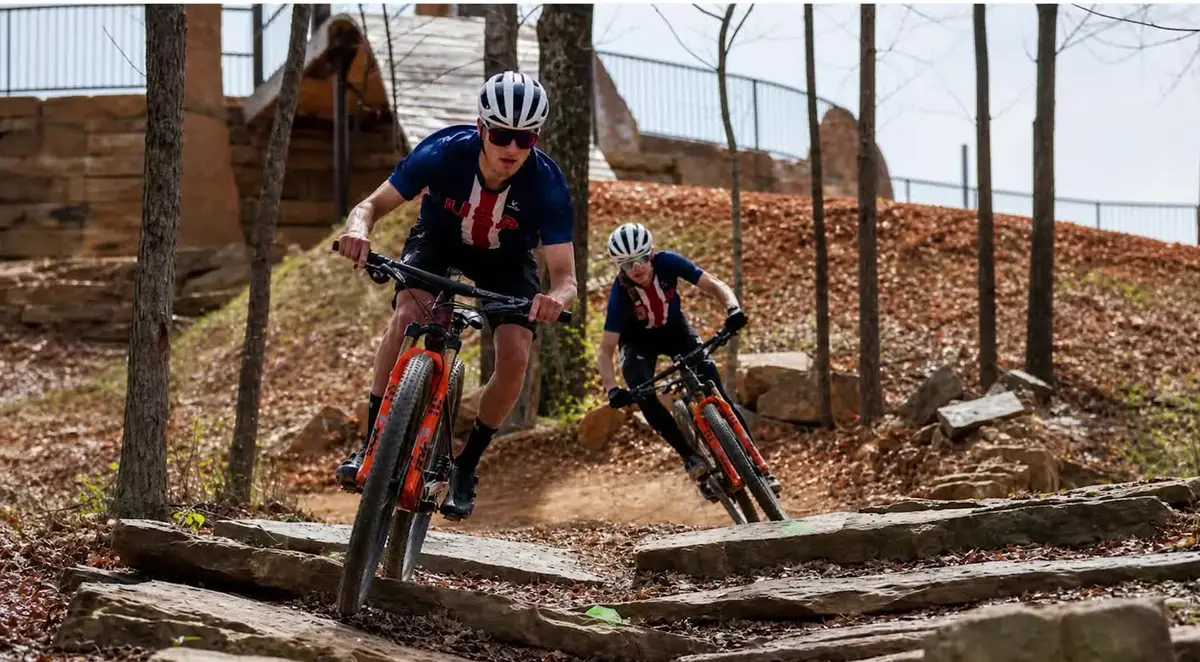
USA Cycling is back in action around Bentonville, with the city serving again as the training base for its national mountain bike program. The organization announced its 2026 world championship roster in Bentonville itself, and it has been steadily deepening its presence in the area rather than treating it as a one-off visit.
The reasoning is straightforward. USA Cycling has pointed to the region's singletrack network and gravel roads as the training ground it wants for the national team — the kind of terrain that prepares riders for what they will face abroad. That is the organization's own framing, and it is the part worth paying attention to.
Skeptics have argued this is manufactured hype — that Walton money bought the team's attention and the trails are incidental. That argument holds up once. It holds up less well when the team keeps coming back, and whether a third stint follows is still an open question. Incentives are certainly part of the picture, and nobody involved pretends otherwise. But a national program does not stake its athletes' preparation on a city that cannot deliver the terrain. Choosing Bentonville over options in Colorado, Utah or Nevada is a practical decision about trail quality, not a favor.
The next test is close. The 2026 UCI Mountain Bike World Championships run August 26–30 in Val di Sole, in Italy's Trentino region — far bigger mountains than anything in the Ozarks. The Olympic target is further out: mountain biking is a Summer Games sport, so the road leads to Los Angeles in 2028.
For homebuyers, that matters in a specific way. Bentonville's trail network is not a seasonal amenity that fades once a marketing budget runs out — it is infrastructure that a national governing body has chosen to build around.
2. Rogers Votes on Continuing Its 1% Sales Tax
Rogers voters will decide on November 3 whether to keep a 1% sales tax in place. This is not a new tax and it is not an increase — it is a continuation, and the city council approved putting it on a special election ballot in August.
The tax underwrites a bond package of about $457 million. The video puts around $118 million of that toward refinancing a previous bond rather than new spending, and somewhere between $100 million and $200 million toward streets — the figures were given loosely, so treat the internal breakdown as approximate. The video also lists a recycling center, a nature park and activity center upgrades among the projects; reporting on the package has centered on street connectivity and city facilities.
The heavy street allocation makes sense once you understand how Rogers is laid out. The city effectively has two downtown-style districts pulling in opposite directions:
- The Bricks, on the east side near Lake Atalanta — brick streets, the Razorback Greenway running through, music venues and Onyx Coffee Lab's headquarters. A genuinely good atmosphere, and harder to reach than it should be.
- Pinnacle, on the west side — most of the newer development and most of the new housing, sitting right off I-49 with easy access.
The stretch between I-49 and Lake Atalanta is the weak link, and it is the one road money could actually fix. Improving access from the interstate to the historic brick district would be a real win for Rogers rather than a cosmetic one.
3. NWA Cities Push Back on Flock Cameras
The third story is the one with national reach. Cities across America have spent the last several years installing Flock Safety cameras, and a slow-moving wave of pushback has been building on social media and in council chambers. NWA is now firmly part of it.
Flock cameras read and log vehicles as they pass, and that data can be linked across jurisdictions to build a picture of where a given car has been. The stated purpose is public safety — tracking violent offenders who cross state lines, finding people who prey on children. That is a real argument, and it is the one always made.
Three NWA cities have gone the other direction, though not all to the same degree. Pea Ridge ended its police department's use of the readers in late July after resident complaints. Centerton's city council voted in August to terminate its contract. Bentonville has held a council meeting where public opposition was heavy, but the council has not yet taken formal action.
According to DeFlock, a community-run site that maps camera locations, the regional counts cited in the video were:
- Rogers: 17
- Centerton: 19
- Springdale: 10
- Pea Ridge, Fayetteville, Bella Vista and Farmington: none
Those are live map figures rather than official counts, and contract terminations can run ahead of physical removal. Still, they point at Rogers and Springdale as the likely next cities to face the question.
The reason this resonates here is cultural rather than partisan. People move to Arkansas for space, quiet and a certain amount of being left alone, and the video's argument is that the arrival of transplants has not diluted that expectation. Surveillance infrastructure is treated as the cost of living in a major coastal city. The case being made in these council chambers is that it should not be the cost of living in Northwest Arkansas — and if the current pace holds, cameras across these cities could be gone within six months.