A Million People in Northwest Arkansas: What Changes
Author
Phillip Shepard
Date Published
A Million People in Northwest Arkansas: What Changes
The Northwest Arkansas metro hit 622,177 people as of July 2025, per Census estimates released in March 2026 — up 2.4 percent in a year, adding 14,744 people. That same Census release makes it the 94th-largest metro in the country and the ninth fastest-growing, its first top-ten finish since at least 2020.
The number everyone quotes next is a million. Let me get that right first: the Northwest Arkansas Council's Growing Home NWA strategy, released in April 2026, targets a region "approaching 1 million residents by 2050." I have hedged between 2040 and 2050 on camera. It is 2050.
Here is what I think changes on the way there.
1. Micro-Downtowns Instead of One Downtown
This is already happening and I expect it to accelerate.
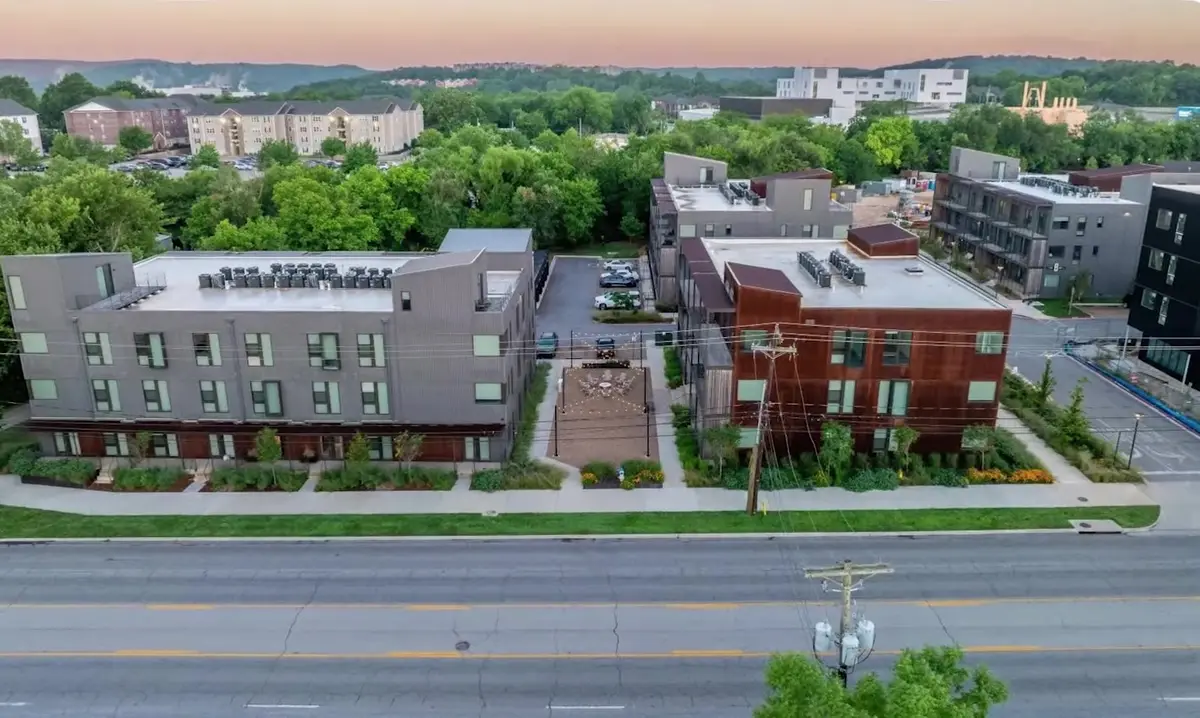
Right now the gravity is in three places — downtown Fayetteville, downtown Bentonville, downtown Rogers. But smaller cities are building their own centers, and even within Fayetteville you are seeing secondary districts form on the west side.
The logic is sound. You cannot retrofit a downtown into a place after it is fully built out. Either you plan the gathering places early or you get a region of subdivisions and arterials with nowhere to walk to.
Now, a correction about who is doing that planning, and it matters because I have described this badly.
I have called the Northwest Arkansas Council "a slush fund of money given by large corporations" that "directs" and "implements" projects. That is wrong on both counts. The Council is a private 501(c)(6) nonprofit business league — the same legal category as a chamber of commerce — funded by member and corporate dues. It has no regulatory, zoning or decision-making authority over any city. It cannot direct a project or restructure anyone's zoning. What it does is advocate, convene, commission research and fund initiatives that cities are free to adopt or ignore.
Its own commissioned work makes this point: one Council white paper describes "a growing mismatch between regional problems and regional authority," because actual land-use authority sits with individual municipalities and, under a 2025 state law, is shifting further toward the state.
I also said this kind of council is "very unique to America." It is not. The Greater Houston Partnership, by its own account, has roughly 900 member companies across 12 counties. The Central Indiana Corporate Partnership runs a similar CEO-led model. Most large metros have one. What is genuinely unusual here is the ratio — a metro of 622,000 with corporate wealth concentrated at the scale of Walmart, Tyson and J.B. Hunt, which gives its council more relative weight than the model normally carries.
2. The Indoor Half Catches Up
The outdoor side of this region is settled. OZ Trails now totals more than 550 miles of soft-surface trail, with NWA Trailblazers credited with building 300-plus miles of it, funded substantially by the Walton Family Foundation. A 2023 University of Arkansas study put cycling's contribution to the state economy at $159 million, up from about $137 million in a 2017 estimate, with more than half of mountain bikers coming from outside the region.
I have predicted the outdoor offering doubles in five to ten years. I cannot find a published plan projecting that, so treat it as enthusiasm rather than forecast. Continued rapid expansion is well supported. Doubling is my word.
One geography note while I am at it: the hang gliding and paragliding I mention is real, but the launch sites are Mount Magazine and Mount Nebo, both roughly 60 to 90 miles south and southeast of Fayetteville. Those are day trips, not local hills.
The gap is indoor and after-dark. Not long ago, if you wanted something to do past 10 p.m. here, the answer was go home. That has changed and it has further to go — go-karting, indoor golf, trampoline parks, more for kids, more that stays open late.
Professional soccer is part of that. USL Arkansas is bringing the region's first pro teams, a men's side in the USL Championship and a women's side in the USL Super League, with a planned stadium of 5,000-plus seats, per the original announcement, in the Pinnacle Hills district in Rogers. Timelines on stadium projects slip routinely, so check the current opening year before you plan around it.
3. Competing on a Different Level
The honest version of where this region sits is that it punches above its weight and knows it.
The corporate roster is genuinely outsized for the population: Walmart, Tyson, J.B. Hunt. Underneath that is a layer of companies that started here — Slim Chickens, founded in Fayetteville in 2003 and, by recent counts, past 300 locations across 26 states plus Kuwait and London, and 7 Brew, founded in Rogers in 2017 and now several hundred stands across dozens of states.
Add AcreTrader, the Fayetteville farmland investment platform, which was acquired by Proterra Investment Partners in August 2025 — I have described that vaguely as selling to "a big investment firm," and Proterra is the name.
What scale changes is the direction of the conversation. Right now, recruiting people here starts with overcoming a reaction. You say Arkansas and someone asks what went wrong. Everyone I know who actually visits revises the opinion fast, but you still have to get them here first.
At a million people, with the Alice L. Walton School of Medicine graduating classes, a STEM university in Bentonville and Crystal Bridges anchoring the cultural side, that flips. The question stops being "why would you move there" and becomes "who is going next."
My read is that this is the real threshold — not the population number itself, but the point where you no longer have to make the argument.