Arkansas Has Snow Plows — I Said It Doesn't
Author
Phillip Shepard
Date Published
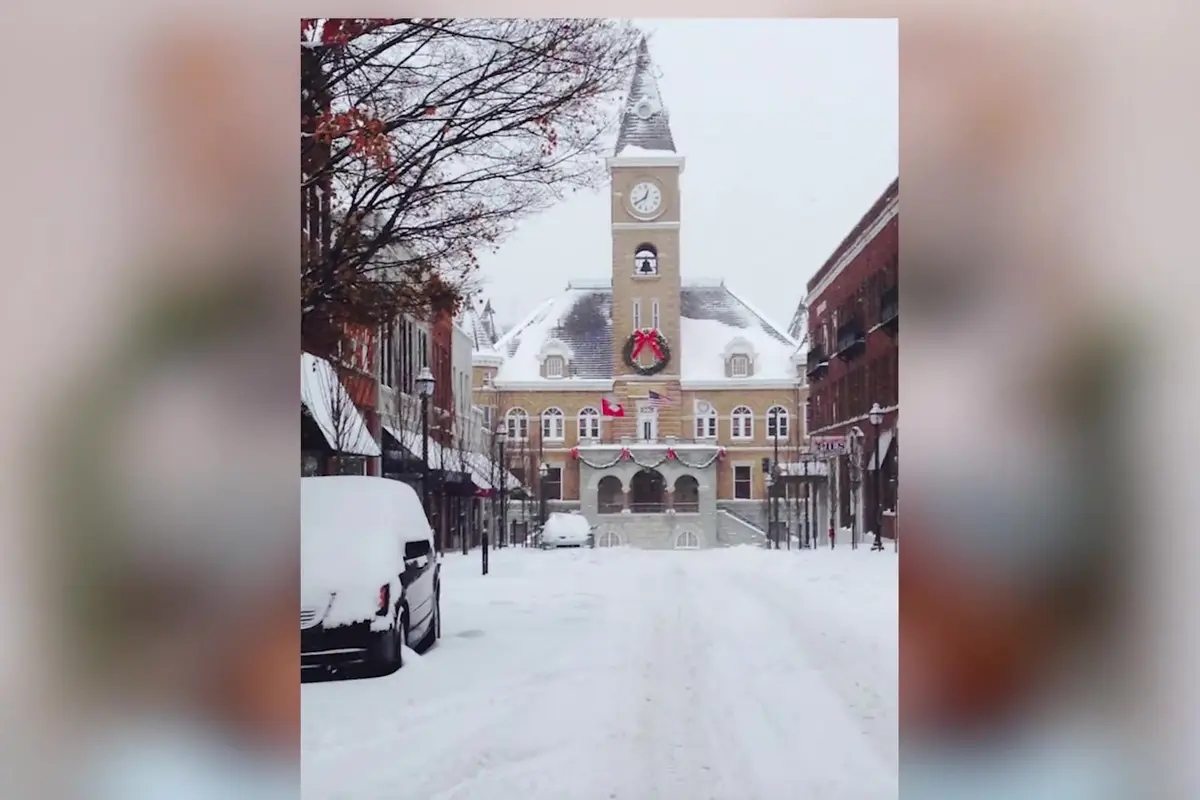
Arkansas has snow plows and salt trucks. In my video about winters here I said twice that we don't — "there's no snow plows here, there's no salt trucks," and later "don't go on the highways cuz we don't have salt trucks." That's the correction I most need to make, because it's the kind of thing a newcomer could act on during an actual storm.
What the state actually runs
The Arkansas Department of Transportation operates more than 700 snowplows and more than 600 salt spreaders statewide, along with 31 brine tanker trailers and brine-mixing facilities at each of its ten districts. It maintains 121 salt storage facilities around the state with a combined capacity of about 84,000 tons.
ARDOT pre-treats roads with brine ahead of forecast storms, and it works a priority system that puts interstate and US highway corridors first — which in Northwest Arkansas means Interstate 49, US-71 and US-412 get attention before neighborhood streets.
So the accurate version of what I was trying to say is this: the region has real winter-weather equipment, and it's concentrated on major routes. Your subdivision street may go untreated for a while. The interstate will not.
That distinction matters for the actual advice. "There are no salt trucks, don't go anywhere" leads someone to assume the roads are uniformly untreated. "Highways get pre-treated and plowed, side streets often don't" tells you which route to take and when.
The temperature numbers — mine were right, with a warning
Here's an unusual entry: in this video, the one actually about winter, my figures hold up. I said the average January low is 28°F, the average January high is "47, 48," and average annual snowfall is 9.8 inches. The snowfall figure in particular is nearly exact — the recent average for this area runs right around 9.87 inches, with enormous year-to-year variation, from zero inches in some winters up to 27 inches in 2010.
I want to flag something I ran into while checking this, because I think it will trip up anyone researching our climate. Searching for National Weather Service normals for "Fayetteville" can surface a file from the Raleigh forecast office — and as best I can tell that one describes Fayetteville, North Carolina, not ours. It shows a January high in the mid-50s and a low in the mid-30s, several degrees milder than what I see reported for this area. I'm reasoning from the office code rather than a labeled source, so treat that as my read rather than a confirmed fact.
If you're comparing climates before a move, make sure the station you're reading is in the right state. Two Fayettevilles, very different Januaries.
One note from reviewing my own back catalog: this is the video where I got these numbers right. In other videos where winter came up as a supporting point rather than the subject, I've drifted warmer, and I've gone back and corrected those separately. The 28-degree figure I gave here is the one to use.
February 2021 was not "one or two days"
I described the big freeze this way: "when I first moved here there was like a zero day, negative 10 degree day. That was a freak thing, broke all the records. I think actually that was the time that Texas had their issues down there too. Same year — we were fine, not a problem. It was like one or two days and we're back to normal."
One part of that was right: it was the same event as the Texas crisis, and I flagged that with "I think" rather than stating it flat. Good instinct. The rest needs revising, and the last part most of all.
The temperature was colder than I said. Fayetteville hit an all-time record low of about −19°F to −20°F on February 15 and 16, 2021, breaking a record set in 2011. I said "negative 10." The actual low was roughly double that.
The cold lasted longer than "one or two days," and the storm around it longer still. Dangerous cold with wind chills of −20°F to −25°F ran February 14 through 16 — three days, not one or two. The broader storm sequence ran February 14 through 20, with two separate heavy-snow events dropping four to eight inches across Washington, Madison, Franklin and Crawford counties, record totals in many spots. Those are two different clocks and I was under on both.
And the region was not fine. SWEPCO implemented rolling blackouts across Northwest Arkansas at the direction of the Southwest Power Pool, cutting power to something like 4,500 to 5,500 customers in Fayetteville, Bentonville, Rogers, Centerton, Lowell and Prairie Grove, some for an hour or more.
I want to be careful about what I'm correcting. When I said "we were fine, not a problem," I may well have been describing my own household, and my household may genuinely have been fine — thousands of others weren't. What I'd change is the generalization. I framed Texas's crisis as something that happened to them while we watched. It was the same regional grid event, and our operator shed load in a controlled way while theirs came closer to collapse. We got the milder version, not a pass.
The right lesson is that this area gets a genuine, if rare, extreme cold event, and it's worth having a plan.
The Chicago comparison, adjusted
I said that in Chicago "it's not uncommon to not see the sun for almost 16 days," and that a local station ran an on-air counter of sunless days.
Chicago's actual record for consecutive days without measurable sunshine is 12, set from December 29, 1991 through January 9, 1992, in a series tracked near Midway Airport since 1893. Other notable streaks run 8 to 10 days. So the phenomenon is real and grim; 16 days has never happened. And I couldn't find evidence of a television station running an on-air counter, though Chicago outlets do report on the streaks.
On the broader claim — that we get "an average almost an extra 30 to over 30 days of extra sun per year" — I couldn't verify that specific gap against an authoritative source. Northwest Arkansas is commonly cited at roughly 217 to 220 sunny days a year, and it is meaningfully sunnier than Chicago. The direction is right. I'd drop the number until I can source it.
School closures: the reason changed, and parents should know
I said schools and workplaces close at the threat of ice "because they don't have the resources to handle it."
I also hedged nearby, noting I'd only lived here since Covid and couldn't say what closures looked like before it — fair, and here's the answer. Arkansas districts used to have Alternative Methods of Instruction days — AMI — which let them run virtual instruction on weather days instead of closing. The 2023 LEARNS Act effectively removed that option by requiring 178 days and 1,078 hours of on-site, in-person instruction for state funding, and an attorney general's opinion found AMI days probably don't count toward it.
So as of the 2023-24 school year, districts largely went back to traditional snow days and make-up days. If you're a parent moving here from a state where school just goes remote when it ices, that's not how it works in Arkansas anymore, and it isn't about equipment.
Two smaller things
I said "there are no snow caps here, so don't feel like you're going to come here and start snowboarding." Correct — there is no downhill ski or snowboard area in Arkansas. The nearest is Snow Creek in Weston, Missouri, near Kansas City, roughly 200 miles away.
And on ice: I said the threat comes up "a couple times a year." I couldn't find an authoritative frequency figure for this area, so I'm not going to put a number on it. What's worth adding is the part I glossed: ice is more dangerous than snow, not equivalent to it. A thin glaze destroys traction and is often invisible, where snow at least announces itself and offers something to grip.
What holds up
The core of the video survives. Winters here are mild by the standards of anywhere north of us, the sun really does come out, and you can run, ride and hike through January in a way you cannot in Chicago. The 9.8 inches of snow is real and so is the fact that most of it is gone by the next afternoon.
I'd just add one thing I didn't say: if you ride, most trail systems ask you to stay off soft-surface trails when they're wet or in a freeze-thaw cycle, because that's when tires do lasting damage. Check conditions before you go rather than assuming a sunny 50-degree day in February means the dirt is ready.