$16.6 Million for Roads and Pathways in NWA
Author
Phillip Shepard
Date Published
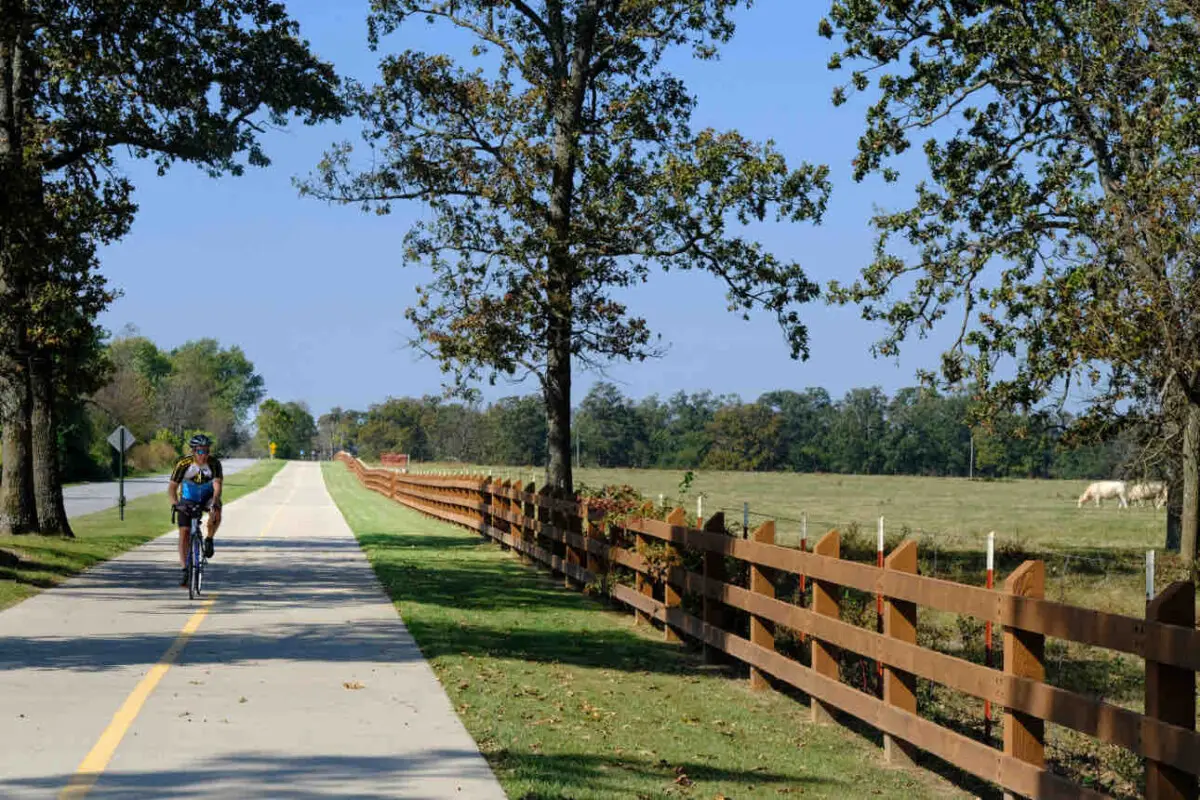
$16.6 Million for Roads and Pathways in Northwest Arkansas
The Northwest Arkansas Regional Planning Commission awarded $16.6 million on June 18, 2025 for transportation projects across the region. I covered this as a trails grant. It is broader than that, the money went to different cities than I said, and one thing I said about a city government was not supported at all.
Here is the accurate version.
1. What the Money Actually Is
The award draws on three federal programs, and the mix matters:
- Surface Transportation Block Grant Program–Attributable: $12.43 million, mostly roads, intersections and safety
- Transportation Alternatives Program: $1.79 million — the only pot specifically for sidewalks, trails and bike safety
- Carbon Reduction Program: $1.55 million
So this is a transportation award with trail and pathway components inside several city projects, not a dedicated trails grant. I framed it as the latter and that overstated it.
NWARPC is the region's federally designated Metropolitan Planning Organization, which is the body that distributes these federal dollars locally. Funds obligate over the following federal funding cycle rather than being spent immediately.
2. Where It Went — I Had This Wrong
I said the largest shares went to Springdale, Lowell and Tontitown, and that Bentonville got a smaller amount. The actual allocation:
- Lowell — $4.13 million
- Bentonville — $3.91 million
- Springdale — $3.77 million
- Fayetteville — $1.66 million
- Tontitown — $1.38 million
- Centerton — $500,000
- Benton County — $500,000
- Bella Vista — $470,400
- Rogers — $200,000
- Washington County — $119,900
Lowell and Bentonville took the two largest shares, with Springdale third. Bentonville was the second-largest recipient, not a small one. Tontitown came fifth, behind Fayetteville.
What I got right: Centerton at $500,000 for phase-two sidewalk work and a traffic signal, and Bella Vista receiving the smallest municipal share at about $470,000.
Lowell topping the list makes sense given the project — a Razorback Greenway tunnel and realignment at Highway 264.
3. I Owe Centerton a Correction
This is the part I most need to fix.
I said Centerton is "behind on the times" and that its leadership needs to "get on the same page," and I used its small allocation as evidence.
That is not supported by anything I can find. Centerton adopted a Master Trails Plan as part of its Comprehensive Plan on October 27, 2020, laying out active transportation priorities and a funding strategy. It has funded trail projects underway, including the Orchards Trail connecting parks and Greenway connections. It went through an Urban Land Institute Technical Assistance Panel review in 2025 and produced a downtown master plan draft in 2026.
And it was competitively awarded $500,000 in this same round — funded like everyone else, not passed over.
A smaller allocation reflects the size and stage of the projects a city submits, not the competence of its government. I drew a conclusion about people doing their jobs from a number that does not support it, and that was not fair to them.
4. Trail Mileage — My Number Was Stale
I have been citing 450 to 500 bikeable miles regionally. That figure appears to come from an older combined count of roughly 322 miles natural-surface plus 162 paved.
Current figures: OZ Trails cites 550-plus miles of soft-surface trail across the network. On the paved side, the Razorback Greenway spine runs about 40 miles, now pushing past 41 with 2026 extensions, with total regional paved multi-use path mileage historically cited around 160-plus and likely higher now.
One more correction: I listed Tontitown among the cities the Greenway runs through. It does not. The Greenway connects seven communities — Fayetteville, Johnson, Springdale, Lowell, Rogers, Bentonville and Bella Vista. Tontitown's trail and road work is funded through the same NWARPC round but sits off the corridor.
5. Fayetteville and "Most Bikeable" — Also Overstated
I say Fayetteville is always ranked one of the most bikeable places in America. That needs qualifying in two directions.
What is true: Fayetteville holds the only Gold-level Bicycle Friendly Community designation in Arkansas from the League of American Bicyclists, awarded December 2022. That designation runs on a four-year cycle and is due for renewal around late 2026, so check current status.
What is not: nationally, Fayetteville's PeopleForBikes City Ratings score was 51 out of 100 in 2025, ranking 414th globally. That is not top-tier nationally.
And as of the 2026 PeopleForBikes ratings, Fayetteville is no longer even first in Arkansas — Bentonville topped the state at 50 out of 100, with Bella Vista and Fayetteville tied at 49.
The trail network here is genuinely good, and the mileage figures above make that case on their own. The specific superlative I keep reaching for is the part that is not accurate.
6. Why 2050 Keeps Coming Up
This part holds up.
Northwest Arkansas hit 622,177 people as of July 2025 per Census estimates released in March 2026, up 2.4 percent from 607,433 the year before. I have been quoting 575,000 to 600,000, which is a year behind.
The Growing Home NWA strategy targets planning for 1 million residents by 2050 — that is the citable figure, not 2045.
The underlying argument is the one I would still make. You cannot retrofit mobility infrastructure into a built-out region. Either the corridors get preserved and built while land is available, or they do not get built. Springdale, Lowell and Tontitown are getting attention now precisely because they are still growing into their footprint.
7. What Has Actually Happened
A Razorback Greenway extension near Bella Vista — referred to as "Mile 41" — broke ground in July 2026, part of pushing the Greenway toward Missouri.
Lowell's Highway 264 Greenway tunnel and realignment was still showing a November 2025 project sheet in design phase, with no groundbreaking I could confirm.
That is normal. Federal money of this type obligates over a two-year window, and most of these projects are in design and engineering rather than construction. I said I was excited to see things built in six to nine months; the realistic horizon is longer.