Benton County Is More Expensive Than Phoenix
Author
Phillip Shepard
Date Published
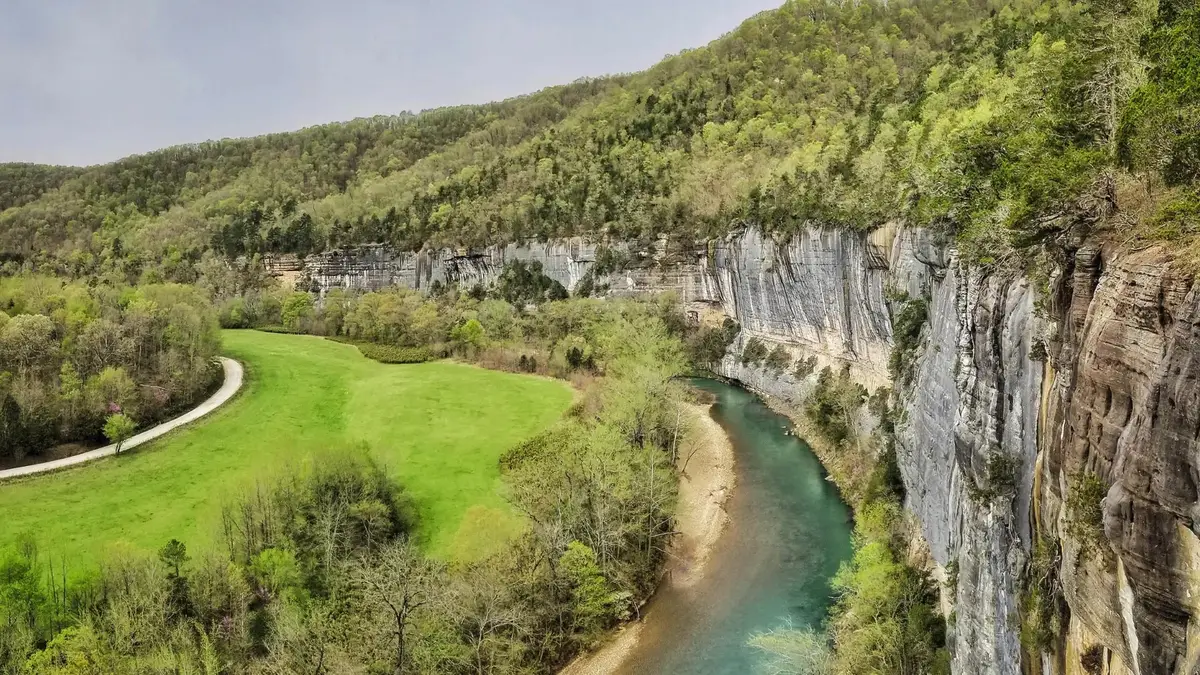
Benton County is more expensive than Phoenix. In this video I told people leaving Phoenix that they could "come here and buy something very similar for a quarter of the cost, if that."
The Phoenix metro median sale price is around $450,000. Benton County's average is $465,888. Washington County is $423,750. Bentonville's median runs around $430,000.
Northwest Arkansas is not a quarter of Phoenix. At the county level it's roughly the same, and Benton County is slightly higher.
What the real number is
"A quarter of the cost" would mean finding an equivalent house here for about $112,000. There is no metro median anywhere in this region remotely near that.
Where Northwest Arkansas does come out ahead is in specific cities: Springdale at $368,500 and Bella Vista at $371,300 run roughly 18% below the Phoenix median.
So the honest version of my pitch is: you might save something like eighteen percent, and only if you buy in particular places. Not seventy-five percent, and not anywhere.
The part of my argument that survives is the one I made right after, about equity rather than price. I said people moving here "obviously have higher equity homes." That's a different and much better point — someone who bought in Phoenix years ago and is sitting on appreciation can convert that into a lot more house here, or into no mortgage at all. That's real. It just isn't the same as our houses costing a quarter of theirs.
And the options list holds up. I said "you don't necessarily need to live in downtown Bentonville to enjoy all the amenities" and rattled off rural land, building your own, living in the trees in Bella Vista, living on the lakes. That's a genuine feature of this region — the price spread between the expensive core and the outer ring is wide, and the outer ring is fifteen minutes away rather than an hour.
Context I should have given: Phoenix is still growing
I talked about all the people leaving Phoenix without saying what that looks like at the metro level, and the answer is worth knowing.
The metro added about 85,000 people between 2023 and 2024, and Maricopa County ranked third nationally for numeric growth among large counties in that stretch.
Growth has slowed — Maricopa added 35,411 in the most recent year, about a 40% deceleration from its 2021-22 peak. But that slowdown is almost entirely international migration falling from nearly 46,000 to just over 22,000. The county still gained roughly 21,000 domestic transplants from other US states, plus about 14,500 in natural increase.
So domestic migration into Phoenix is still net positive. People are certainly leaving, some of them to here — but that's churn in a big growing metro, not a place emptying out. Worth knowing if you're wondering whether you'd be selling into a collapsing market.
The heat — my instinct was right, my numbers weren't
I said "the average is 110 degrees every single day" for "about 6 months out of the year, seven months, they say sometimes eight."
I attributed that to clients — "from what I understand, especially with the people I've been helping to move here, they say" — and I'll keep that credit. I was reporting what movers told me, not claiming to know Phoenix myself.
The normals: Phoenix averages 106.5°F in July, 104.2 in June, 105.1 in August. No month averages 110. Across a normal year Phoenix sees about 111 days at or above 100°F and roughly 21 days at or above 110°F — twenty-one days, not every day for half a year.
But the recent records are more extreme than my exaggeration, which is the frustrating part. In 2023, Phoenix ran 31 consecutive days at 110°F or above, and hit 110+ on 55 days that year; July 2023 became the first month in any major US city to average over 100°F for the full monthly mean, at 102.7. In 2024 it hit 110°F on 70 days — a new record — with 113 consecutive days at 100°F or above.
If I'd said "Phoenix hit 110 on seventy days in 2024 and ran a month straight above 110 in 2023," that would have been both accurate and more alarming than what I actually said.
The air-conditioning line I'd keep. I said "your air turns on over in like March and it doesn't actually turn off until like November." With 111 days a year above 100 and highs above 100 from June through August plus shoulder months in the 90s, that's a fair description of lived experience even if my temperature figures were off.
Our summers are more humid than Chicago's
This is the one I most need to correct, because I stated it confidently and the summer comparison runs the other way.
I said "we do have lower humidity," that I came from "a very high humid area in Chicagoland," and that "Chicago, Wisconsin, Minnesota — high humidity, so many lakes, so much moisture... Northwest Arkansas specifically is many steps down from there."
In summer, Northwest Arkansas is more humid than Chicago.
Part of what went wrong is a measurement trap worth understanding. Relative humidity is usually reported two ways — a pre-dawn maximum and an afternoon minimum — and the daily average sits between them. In another video I put our humidity "around 70%" against Illinois at "90 to 95%," which compares our daily mean against their morning maximum. Different numbers.
Compared like for like, on annual state averages:
- Arkansas: 85% morning, 49% afternoon
- Illinois: 83% morning, 58% afternoon
- Florida: 87% morning, 57% afternoon
Arkansas mornings are more humid than Illinois mornings, and only two points below Florida. Illinois is more humid in the afternoon, and on an annual daily mean the two states are close — so the year-round picture is a wash. It's summer where the gap opens against us.
Dew point is the honest measure, because it strips out the temperature effect and tracks how humidity actually feels. Average July dew point:
- Houston: 72°F
- Northwest Arkansas region: high 60s (the nearest station with published normals, Fort Smith, reads 68.5°F, and NWA sits higher and cooler, so call it 66-68)
- Chicago O'Hare: 61.7°F
So our summer air carries something like five to six degrees more dew point than Chicago's, and sits four to six below Houston's. On the standard comfort scale, high-60s dew points are in the oppressive range; Chicago's low 60s are merely sticky. One weather service rates Fayetteville as muggy or worse on about 74% of July days, with a muggy season running mid-May to late September.
What I'd actually tell someone moving from Phoenix: you are coming from a genuinely dry climate to a genuinely humid one, and it will be an adjustment. My "it's not going to be extreme, you're not going to be dripping like you would in Florida" survives as a relative statement — we are a few degrees of dew point below the Gulf Coast. But "many steps down" from the Midwest is wrong for summer.
I said "I've never had anyone complain about this." I'd stop leading with that, because I was telling people something that isn't true and then citing their lack of complaint as evidence.
Sunshine — I got this one right
I said "we don't have as many sunny days as Phoenix," that Phoenix "is insanely sunny all the time," and that we're "not quite as sunny as both Florida as well as Arizona but we are quite up there."
That's a genuinely well-calibrated statement and I want to flag it, because in an earlier video I made a version of this claim that was much sloppier. Northwest Arkansas is commonly cited around 217 to 220 sunny days a year — meaningfully sunnier than Chicago, nowhere near Phoenix. Conceding the comparison was the right call.
The one number I'd still leave off is "30 to 40 extra days of sun" versus Illinois. I've tried to source that figure before and couldn't.
Four seasons and the long fall
I said fall runs "September October November and even parts of December," and that "winters really start at the middle to end of December and go into about March."
Peak fall color in the Ozarks is mid-to-late October. Color starts changing in late September to early October and peaks two to three weeks later. November color is a southern and eastern Arkansas phenomenon — up here we're typically past peak by early November. December peak color doesn't happen anywhere in the state.
And winter starts earlier than I said. The average first freeze in Fayetteville is October 19. The cold season — average highs below 55°F — runs roughly November 26 to February 25. So freezing temperatures arrive in mid-to-late October and real winter around Thanksgiving, not mid-December.
On the end of winter I was fine. "Into about March" is fair — the cold season breaks in late February, though freezes continue to around mid-April.
But here's the part where I was right and didn't know how right. In another video I explained the long-leaves observation this way: "we have a lot of oak trees here so they hold on to our leaves forever."
That's a real, named botanical phenomenon called marcescence — the retention of dead leaves on the branch through winter instead of dropping them in autumn. It's specifically documented in oaks and beeches, exactly the trees I named, and Northwest Arkansas is oak-hickory forest, so it's conspicuous here. The abscission layer at the leaf base never fully forms, so the dead leaf stays attached. Leading explanations include protecting next spring's buds from cold and drying winds, delivering leaf litter as spring mulch rather than fall, and deterring deer from browsing buds. It's most pronounced on young trees and the lower branches of mature ones — which is exactly why it looks universal from a car window.
The distinction that matters, since it's easy to hear this the wrong way: marcescent leaves are brown, dead and brittle. They are not autumn color. Leaves still on the trees in December is literally true and has a name. Fall color into December is not a thing anywhere in Arkansas.
The culture section, and a contradiction I'd fix
I used the word "culture" two different ways in the same video, and the second one contradicts the first.
Early on I invoked politics as part of what changed in Phoenix, and closed the thought with "you get my drift." Later, explaining what's better here, I said: "now I'm not saying culture in a sense of politics — what I am saying culture is a sense of like sensibility, like there's very little honking, no one gives you the middle finger here when you're driving, it's a little bit slower paced, there's more handshake agreements."
The second definition is the one I should have used both times. Pace, driving courtesy, how people deal with each other — those are things I can actually speak to from living in both places, and they're what I meant.
"You get my drift" is not an argument. If something is worth saying it's worth saying plainly and backing up; if it isn't, it doesn't belong in the video as an implication.
The "barrier to entry" argument
I said "moving to Arkansas is a barrier to entry... once you say moving to Arkansas people are like, what is wrong with you. So that is a natural barrier to controlled growth. This area will grow but it will never be exponential."
I also raised the obvious objection myself — "a lot of you might be watching this video and be like, oh my gosh, Northwest Arkansas has become the next Phoenix" — which was the right instinct.
The data cuts against my dismissal. Northwest Arkansas grew about 13.8% between 2020 and 2025, from roughly 546,725 to 622,177 people, making it the ninth-fastest-growing metro in the United States by rate. In one recent year, Bentonville appeared on the New York Times' 52 Places to Go, Condé Nast Traveler's Best Places to Go, and Travel + Leisure's 50 Best Places to Travel.
The stigma I was counting on as a brake is measurably weakening. And "controlled growth" is a term I made up myself — I said so on camera in another video.
Ninth-fastest in the country isn't exponential. It also isn't the quiet secret the argument requires.