Sam Walton Didn't Pay People in Stock — Where the Money Actually Came From
Author
Phillip Shepard
Date Published
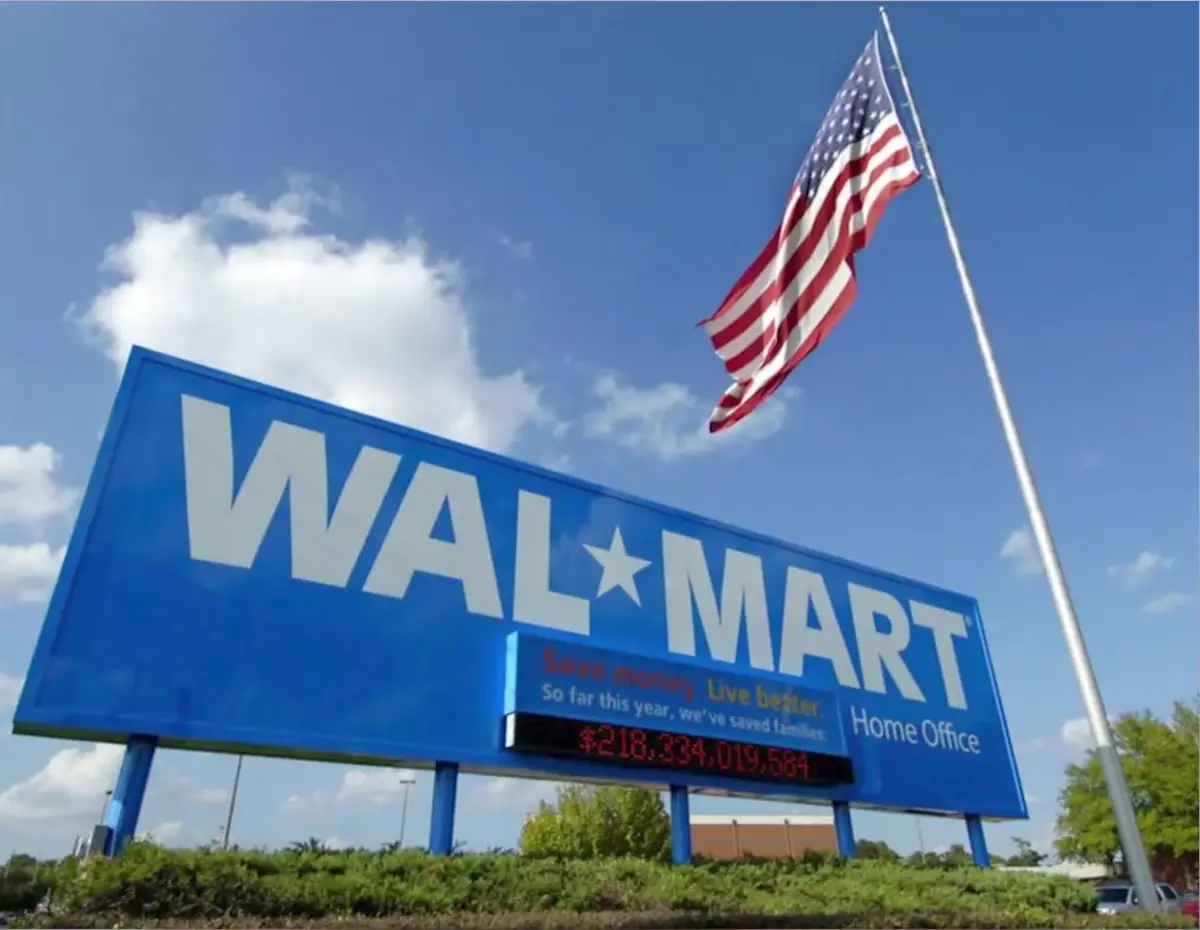
Sam Walton did not pay people in stock for painting his stores. I've told that story on camera in more than one video. In this one I said "Sam Walton gifted thousands, millions and millions of shares to people in Northwest Arkansas in exchange for services and goods back in the day, and so that's where a lot of that wealth comes from when it comes to that old money." I've said it as fact. I can't find a single source for it.
The wealth is real. The mechanism I described isn't.
What actually created the Walmart millionaires
Two documented things, and both are better stories than the one I was telling.
The 1970 IPO. Walmart went public on October 1, 1970, underwritten by Stephens Inc. of Little Rock, at $15 to $16.50 a share. Local people bought in and held. That's it — no handshake, no barter. The famous version of this is the early shareholders' meeting that six people attended in a Bentonville coffee shop. A $1,650 stake from that era would be worth well over $10 million today.
Profit sharing, starting in 1971. Walmart introduced a profit-sharing plan for any associate with at least a year of tenure and 1,000 hours a year, funded on a formula tied to profit growth, alongside a discounted stock purchase plan. This is the documented mechanism that turned long-tenured hourly associates, store managers and secretaries into millionaires. It's the thing I was actually reaching for.
I think the barter story is what happens when profit sharing gets retold enough times by people who weren't there. It's a better anecdote — the handshake, the paint job, the thousand shares — and it's wrong. Nothing in Walton's own accounts, Walmart's corporate history or the business press describes him paying vendors or tradespeople in equity. He was famously frugal and cash-conscious, which is close to the opposite of improvising stock deals.
Correcting this matters more than a name misspelling. I was explaining where a whole region's wealth came from, and I got the mechanism wrong in a way that made it sound like luck and personal favor rather than a stock purchase plan open to anyone who worked there.
The wealthiest family: I got this one right, including the fine print
I said "the wealthiest family in the world exists here in Northwest Arkansas" and then made the distinction that it's "not the wealthiest individual, but the wealthiest family." Both halves hold up.
Bloomberg and Forbes both put the Waltons first among family fortunes, at roughly $475 billion to $520 billion depending on the tracker and the day. That holds even including royal and sovereign-linked dynasties — Abu Dhabi's Al Nahyan family runs around $324 billion and Qatar's Al Thani around $173 billion. The one caveat worth adding: the Al Nahyans briefly passed the Waltons in 2023, so this ranking does move.
The wealthiest individual is Elon Musk, somewhere between $690 billion and $840 billion depending on the tracker. So the family-versus-individual distinction I drew was exactly right.
I'll keep the rest of what I said about the family general. What's publicly established is where they work, not where they sleep: Alice Walton founded Crystal Bridges and the Alice L. Walton School of Medicine in Bentonville, and Tom and Steuart Walton co-founded Runway Group, Blue Crane and RZC Investments here, with Steuart also on Walmart's board.
How rich is Northwest Arkansas, actually
I opened that answer by admitting "I don't know, like, per capita the wealth of people here in the area itself" and conceding "it's hard to obviously analyze data — what is true, what is not." Both honest, so let me fill it in.
Northwest Arkansas's median household income is about $81,208. Arkansas's statewide median is about $50,540 — the second-lowest in the country. The metro's poverty rate runs around 11% against roughly 15.5% statewide. So the intuition I had, that salaries here run elevated because of the corporate concentration, is supported. This metro is roughly $30,000 a year ahead of its own state.
The Razorback logo does not cost $100,000 a year
I said "just to borrow the logo of the Razorbacks is $100,000 a year." I want to correct that specifically, because it's the kind of number that would stop a small business from even calling to ask.
The University of Arkansas licenses its marks through the Collegiate Licensing Company, which is the standard model across college sports. It isn't a flat annual fee. It's an application fee plus a royalty on wholesale sales — commonly in the 8 to 12% range industry-wide — plus an annual minimum guarantee. A licensee would only hit $100,000 a year by selling a great deal of merchandise, at which point the fee is a percentage of real revenue, not a toll.
There has also been a program specifically letting local crafters access the Razorback name at reduced rates. So the barrier for a small vendor is much lower than I made it sound.
For scale on the point I was actually making: Razorback athletics booked $20.2 million in royalties, licensing, advertising and sponsorships in fiscal 2023, out of $167.3 million in total athletics revenue. The program does make serious money. It just doesn't make it by charging six figures for a logo.
Growth: the number was right, the framing undersold us
I said "we average around 35 to maybe 40 people per day moving to the area itself," then called that "pebbles compared to Dallas or other parts of Florida or Carolina, or even Phoenix, or Vegas."
The 40-per-day figure is right — that's the Northwest Arkansas Council's number, up from about 23 a day between 1994 and 2010, and projected to run around 43 a day through 2050 on the way to a million residents.
The "pebbles" part is where I sold us short. In raw headcount, sure — Dallas–Fort Worth adds 300-plus people a day because it's starting from an enormous base. But by rate, the metro is up about 41% since 2010 and now sits around 622,000 people, which puts it ninth-fastest among all US metros by percentage growth. We aren't growing slowly. We're growing fast from a small base, which is a different thing and a better argument for the controlled-growth point I was trying to make.
The corporate consolidation claims, graded
I said Walmart is "closing them down, moving all the corporate people right to Bentonville." Mostly true, but "all" is wrong. Walmart's 2024 relocation mandate moved remote corporate staff into hubs, and Bentonville is the primary one — but the company explicitly kept its Bay Area and Hoboken-area offices. Three hubs, not one.
"Tyson did the exact same thing" — this one is exactly right. In October 2022 Tyson announced it was closing its Chicago, Downers Grove and Dakota Dunes offices and relocating roughly 1,000 corporate positions to Springdale, with no layoffs attached, which in practice meant relocate or leave.
"J.B. Hunt's building a brand new campus" — close, but it's an expansion rather than a new campus. J.B. Hunt has been enlarging its existing Lowell headquarters, buying an $18 million office park in 2022 and another 56-plus acres for $18.25 million, with more than 300,000 square feet of new buildings approved by Lowell's planning commission in January 2026 as part of a phased plan to add about 2,000 employees.
Fayetteville: the fandom is real, the rankings claim needs a year attached
On why Fayetteville is famous, I said "it's going to be the Razorbacks" and I'd stand by the whole theory — including the bit about the appeal of a program that's volatile rather than consistently dominant.
The Clinton House Museum I mentioned is real and more specific than I said: 930 W. Clinton Drive, the house Bill Clinton bought in August 1975 for $17,200, where he and Hillary Rodham married that October 11. Both were teaching at the University of Arkansas School of Law at the time.
The claim I need to date-stamp is that Fayetteville "always makes the ranks for affordable housing on those different graphs everywhere." Fayetteville has ranked as high as 7th and 10th on U.S. News Best Places to Live — but those are older editions. The 2026 U.S. News list places Fayetteville 131st of 250 metros. That's a real slide, and it tracks with what the Skyline Report has shown about prices here since 2020.
The ranking that did go our way this year is the Milken Institute's, which named Fayetteville–Springdale–Rogers the top-performing large metro in America. That's a jobs-and-wages index, not an affordability one — which is roughly the shape of the whole story.
The vague political claim, replaced with data
I said, without naming anyone, that people are leaving states that are "ran less well" and where "they don't agree on certain things with the people that are moving here," and that "sometimes people get forced out, in a sense, like we have to move because of just state laws." That last clause at least names a mechanism, so it isn't purely a shrug.
I couldn't find survey data supporting that as a driver of migration here. What I can give you is where people actually come from. The largest sources of movers into Arkansas are Texas by a wide margin at more than 17,000, then California at about 7,800, Florida around 7,100, Oklahoma about 6,000 and Louisiana about 5,000, with Missouri and Tennessee also near the top. Arkansas ranked first nationally for inbound movers in the Atlas Van Lines study two years running, and 38% of newcomers to the state went specifically to Bentonville.
Texas, California and Florida topping that list looks like an affordability and jobs story, which is the story I spend most of my time telling anyway. I should have led with the numbers instead of the insinuation.