Bella Vista Has Been a Retirement Community Since 1965
Author
Phillip Shepard
Date Published
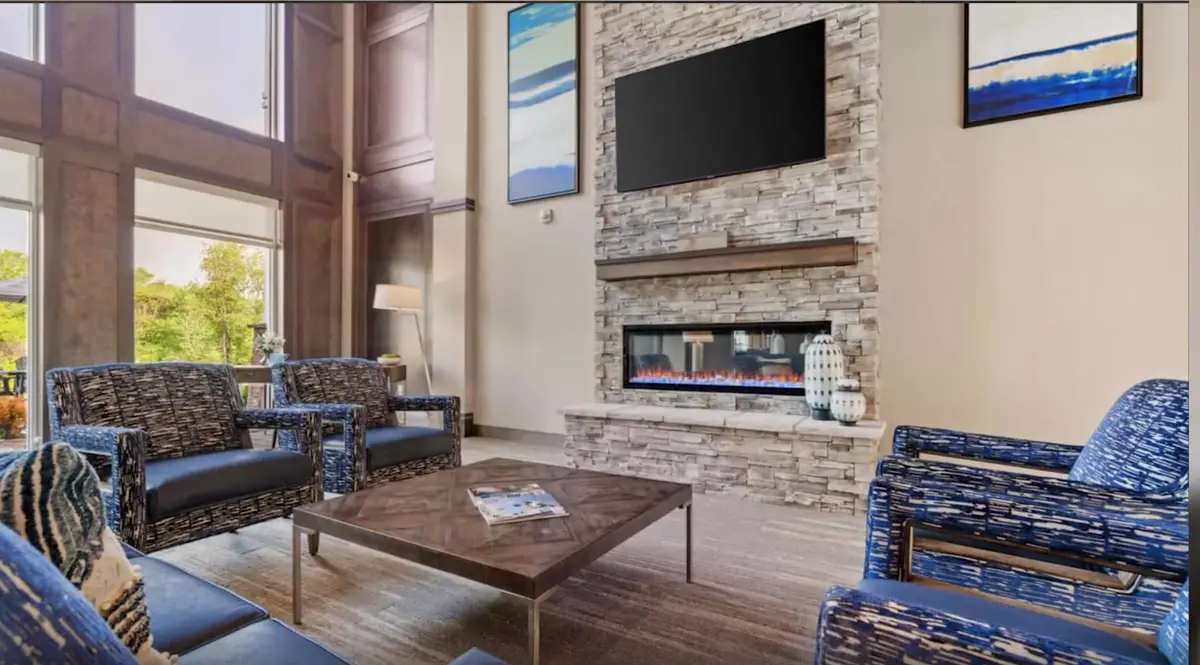
Bella Vista has been a retirement community since 1965. In this video I said that when it comes to senior housing here, "10 years ago there was no senior centers, not a single bit."
Bella Vista Village opened in 1965 as an explicitly retirement-oriented development. John A. Cooper Sr., who had already built Cherokee Village as a retirement community, bought roughly 40,000 acres in Benton County and sold tens of thousands of home sites on a graduated-retirement pitch — buy the lot young, have it paid off by the time you retire. The Property Owners Association formed the same year.
Bella Vista turned fifty in 2015 — the exact year I said nothing existed.
And in Fayetteville, Butterfield Trail Village opened March 10, 1986, founded by five local churches as the area's first self-governed nonprofit retirement community. It's now a 44-acre campus on East Joyce offering independent living, assisted living, memory care and skilled nursing. That's thirty-nine years of continuous operation, and it offered the full continuum of care long before 2015.
There were also purpose-built retirement projects in the Fayetteville pipeline during 2015 itself, and Arkansas has had a licensed long-term-care sector regionwide for decades.
The version of my argument that actually works
This is the fourth time in this series I've said a version of "there was nothing here before," and I've been wrong every time — about Bentonville before 2015, about downtown Springdale, about Northwest Arkansas healthcare, and now about senior housing.
What I probably meant, and what's defensible: the pace and scale of new market-rate senior living construction has accelerated sharply in the last decade. That's true and supportable.
The category existed. The building boom is new. Those are different claims and only one of them is mine to make.
The facility itself — right number, wrong word
I said "a 117 room senior center is being developed in Fayetteville."
The number is right. It's Meadowview of Fayetteville, a three-story, 117-unit senior living community at 616 N. Rupple Road, developed by Meadowview Senior Living out of Chesterfield, Missouri and operated by Ciel Senior Living. A $25.52 million construction loan, arranged through IPA Capital Markets with The Bank of Fayetteville lending. Opening in early fall 2026.
But "senior center" is the wrong term, and the distinction matters if you're actually shopping for care.
A senior center is a municipal or nonprofit daytime activity center for older adults. Nobody lives there.
This is senior living — residential apartments, and more than half of them licensed assisted living. The mix is 60 independent living apartments and 57 assisted living apartments. Amenities include a fireplace lobby, a beauty and barber shop, a fitness and yoga studio, a theater and two spas.
They're also units or apartments, not "rooms." I collapsed three different things into one word, and a family trying to figure out what level of care a parent needs would be badly served by my version.
The demographic argument holds up
I said people move here for work, stay, and then "the grandkids' grandparents follow," and that "what's radically changed in the last 5 to 7 years is that people stay."
The aggregate data supports the trend. Northwest Arkansas's 65-and-over population grew 13.5% from 2020 to 2023 — faster than any other age group, well ahead of the region's roughly 8% overall growth, reaching about 80,000 people. Nationally the 65-plus group grew 9.4% over the same span, so we outpaced the country. Going further back, the region had around 120,000 residents aged 55-plus in 2016, nearly 40% more than a decade earlier.
The mechanism I described, I can't prove. I don't have data on vendor-employee tenure or how long transplants stay, and I know of nothing establishing that parents follow adult children into the region. The 65-plus growth is consistent with my story — but people aging in place produce exactly the same statistic.
So the trend is real and documented. The explanation is my professional observation, and I'd label it that way rather than state it as fact.
The RedBall Project — right mechanics, wrong itinerary
The mechanics I described are close to right. It's a 15-foot, roughly 250-pound inflatable ball wedged into a new site each day. I said it "stays there for a day or two and then it moves along" — it's one day per site, 11am to 6pm, so slightly generous but essentially right.
The artist, whom I never named, is Kurt Perschke. Worth knowing if you want to follow where it goes next.
On "the world's longest running street art" — that's genuinely the project's own framing, straight from its press materials. I'd attribute it as their claim rather than assert it flat, since it's marketing language rather than something anyone adjudicates. It started in St. Louis in 2001 and has hit 40-plus cities and 300-plus sites.
The cities I listed were half wrong. I said "Munich, Tokyo, Paris, Galloway, Memphis, Montreal."
- Paris and Montreal — confirmed.
- "Galloway" is Galway, Ireland. I was reaching for the right place.
- Munich, Tokyo and Memphis don't appear on the project's own list of cities. The Asian stops were Taipei and Tainan, Taiwan, plus Korea, which is probably where my Tokyo came from.
Real stops include Barcelona, Sydney, Portland, Chicago, Toronto, Abu Dhabi, Perth, Liverpool, Saskatoon and Chapel Hill.
And the Northwest Arkansas itinerary I gave was wrong. I said Bentonville, Rogers and Fayetteville.
It ran September 11-15, 2024, in four cities: Bentonville (Sept 11, an alleyway on West Central), Siloam Springs (Sept 12, The Crown Hotel), Fayetteville (Sept 13, Art Court on West Dickson), Springdale (Sept 14, Shiloh Square), and back to Bentonville (Sept 15).
Rogers was never a stop. And I left out Siloam Springs and Springdale entirely.
One more attribution fix: it was presented by the Municipal Arts Alliance, a project of CACHE, with support from the Walmart Foundation and Walton Family Foundation. I framed the whole thing as flowing from Crystal Bridges and the Momentary's gravity. The art infrastructure argument isn't wrong, but CACHE brought this one.
And on the Momentary — I called it "a sister museum to Crystal Bridges." It describes itself as a contemporary art space satellite to Crystal Bridges, and it's operated by Crystal Bridges. Parent and satellite, not siblings. It opened in February 2020 in a repurposed 63,000-square-foot former Kraft cheese plant.
Orchard Townhomes — I got this exactly right
I hesitated on this one — "the Orchard, I want to make sure I say it right, Orchard Townhomes are under construction in Bentonville" — and the hesitation was unwarranted.
Orchard Townhomes, developed by WalkingStick with KMW Properties. Nine units on Southeast B and Southeast C Streets, walking distance from the downtown Bentonville square. And the price I gave is correct: starting at $1.5 million.
Units run 2,760 to 2,935 square feet — four bedrooms, three and a half baths, two-car garage, office, gas fireplace, patio, with elevators in two of them. Built by Ross Construction Group with architecture by Oren Architecture.
One thing worth keeping straight since I paused on it: it's Orchard singular. There's a separate, unrelated "Orchards" apartment complex in Bentonville.
The price prediction, and why I'll leave it alone
I said there won't be "a huge equity swing in the next 3 to 5 years in some of these downtown Bentonville homes," that they're "kind of priced in already," and that if you bought in five years "there's probably going to be, I assume, not going to be a huge price change."
I hedged that four separate ways — "in my opinion" twice, "I assume," and "I could be totally wrong but that's just the direction I see it going." That's the most carefully qualified prediction in anything I've put on camera, and I'd keep every one of those hedges.
For what it's worth, it has held up better than most of my calls: the most recent regional report shows Benton County's average sale price down 1.2%, with the research center that produces it describing the region as more of a buyer's market than a seller's market for the first time in years.
But I'm not going to turn that into a refined prediction. A hedged guess that happened to land is still a guess, and what any of it means for a specific house is a question for a lender and an accountant looking at your actual numbers.
The affordability point underneath it is the useful part, and it survives: you don't have to buy in downtown Bentonville to be near what makes this area good. I said you can "live maybe three blocks away and live in a $400,000 house."
And my framing was better than I'm giving myself credit for. I said you're "5 to 10 minutes away from all those things" and named Bella Vista and Pea Ridge — that's the accurate version. Bella Vista's median is around $371,300 and Pea Ridge's around $338,100, so the $400,000 figure is if anything conservative for those towns.
The one place it slips is the separate "three blocks away" line. Bentonville's own median runs about $430,000, so three blocks from the square isn't where a $400,000 house lives. Minutes, yes. Blocks, no.
The real claim is that the price gradient across this region is steep and the drive between tiers is short. That's true, and it's a genuinely good thing about living here.