I Had Pea Ridge and Tontitown Backwards
Author
Phillip Shepard
Date Published
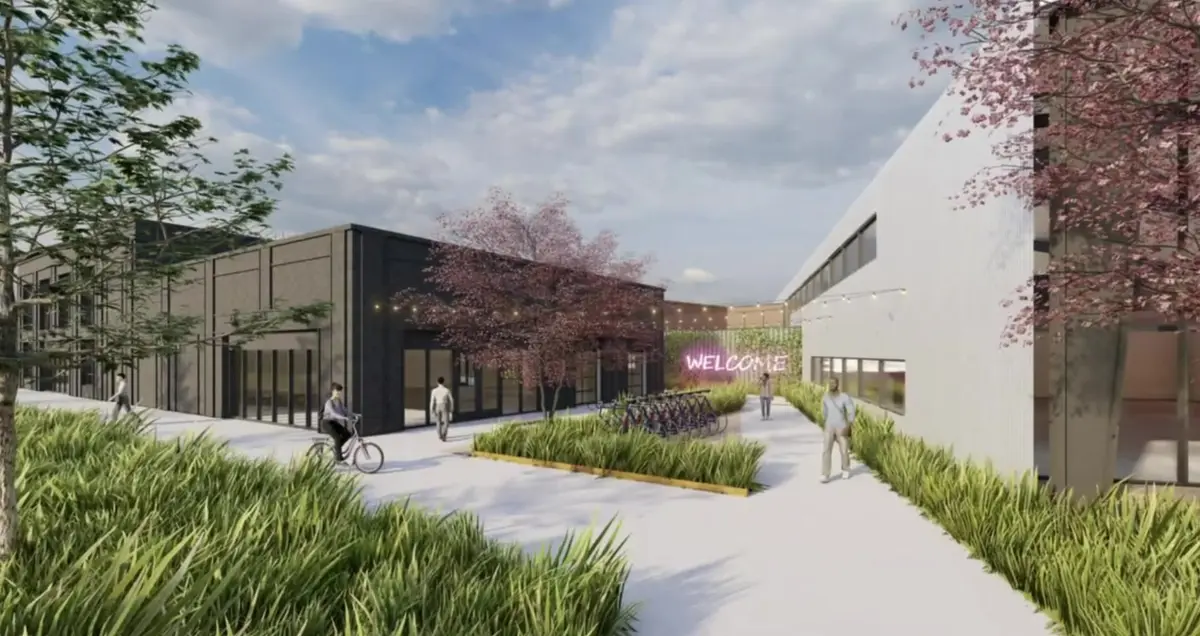
Pea Ridge is the city I said was at risk of becoming a pass-through, and it's now the fastest-growing city in Arkansas. I said the town — my audio garbles the name, but it's Tontitown — "was rated the fastest growing city in Arkansas, which I don't know if that's like a really big feat," and warned that "Pea Ridge might run into that issue too if they don't get ahead of the curve."
That was true of an earlier year's ranking, as I'll get to. But against the latest estimates I had the two cities backwards.
Pea Ridge grew 17%, from 8,709 to 10,190 — first in the state among cities over 1,000. Tontitown grew 7.9%, from 7,358 to 7,941, which put it third. And Pea Ridge is spending money on a downtown right now.
Tontitown's growth claim was true, for a different year
To be fair to the video, Tontitown was the state's fastest-growing city in the 2022-to-2023 estimates, at around 13%, going from 4,300 in 2020 to over 7,300 by the end of 2023. That's real and sustained.
My dismissiveness was half right, though, and for a reason I didn't articulate: percentage growth off a small base can be misleading. Bentonville grew only 3.5% — but that was 2,081 people in a single year, against Tontitown's 583 in the same year. More than triple the actual humans, at a fifth of the growth rate. Centerton is the fastest-growing among cities over 20,000 at 7.2%, up roughly 49% since 2020, and 31st fastest in the country.
So "one of the fastest-growing" is the accurate phrasing, and the interesting comparison is percentage versus absolute — not whether it counts as a feat.
The founding story I gestured at is remarkable
I said the town "was established by an Italian heritage — hence why the [Tontitown] Winery, the Grape Fest, all the different things." Right, and the actual story is far better than that summary.
Tontitown was founded in 1898 by about 40 Italian Catholic families led by Father Pietro Bandini, an Italian priest — and they didn't come to the Ozarks first. They had arrived in 1895 and 1897 as tenant farmers at Sunnyside Plantation in Chicot County, down in the Arkansas Delta, where malaria, poor sanitation, unfamiliar cotton farming and contract disputes broke them. Bandini, who had come to Sunnyside as chaplain, went scouting the Ozarks for terrain that resembled northern Italy, and made the initial land down payment out of his own pocket. He built St. Joseph's church, organized the Tontitown Band, and became the town's first mayor.
The name comes from Henri de Tonti, the Italian-born explorer who came down the Mississippi with La Salle and founded Arkansas Post in 1686.
That's a story about people who failed in one part of Arkansas and rebuilt in another. It's the whole reason the town looks the way it does, and I compressed it into "an Italian heritage."
The Grape Festival, and a detail that stopped me
The Tontitown Grape Festival traces to late June 1898, when the settlers held a thanksgiving picnic for the Feast of St. Peter, Bandini's patron saint. It grew into a public festival, runs each August — the 2026 dates were August 4 through 8 — and is believed to be the longest-running annual community celebration in Arkansas. Spaghetti dinners, carnival rides, live music, and the crowning of Queen Concordia.
Here's the part I didn't know: grape judging used to be the centerpiece and has been dropped, because there aren't enough grape growers left in Tontitown to hold the contest.
So the festival now honors the grape's historical role rather than a living industry. That's a poignant fact about a town whose identity I was describing, and it's exactly the kind of thing that gets lost when you summarize a place as "grape stuff going on."
On the winery: I said "big wineries" plural. I can confirm one — Tontitown Winery, run by the Ranalli family, with a winemaking tradition dating to 1923, housed in a 1917 building and making wine on site from the family's own grapes. I couldn't confirm others, so I'd say winery, singular.
It's Italian-inspired, not Venetian — and it has a name
I described "a massive throwback Venetian level Italian downtown section," with "Venetian apartments," "water sprinkler stuff in the center" and "Venetian level brick work."
The project is Tontitown Heritage Village, announced around October 2024, and it's framed as Italian-inspired heritage — not Venetian specifically. Planned features: a piazza, an amphitheater, a 12-acre lake, fountains, and housing for around 5,000 people, with a library and medical facilities under discussion. The historic St. Joseph's church sits inside the heritage area.
It's in the planning phase, with no published cost and no completion timeline.
And my instinct there was right. I said "there's been no price point set to this," and that's still accurate. Flagging a missing number instead of inventing one is the correct move.
The Johnson figure resolves cleanly
I said "a $5505 million brand new downtown section of Johnson." The garble resolves to $55 million, and everything else about that segment checks out.
The project is The Warehouse District, the next phase of the Johnson Square neighborhood, by High Street Real Estate and Development of Fayetteville. Six acres, seven buildings, 66 apartments and 79,100 square feet of retail, restaurant, office and medical space, southeast of Main Drive and Johnson Mill Boulevard. Completion was expected in spring 2026.
The broader 93-acre Johnson Square neighborhood is valued around $200 million. And there's a newer addition I didn't have: The Morgan, a $7 million, three-story building with eight condominiums plus restaurant space, reported in August 2026.
Here's a tension worth naming that I missed. Johnson's population is about 3,609 as of the 2020 census and roughly 3,684 estimated for 2025 — it barely grows, while hosting a $200 million neighborhood. That's a sharper observation than "Johnson is a weird place because there's a lot of money in that little quarter-mile area — banks and offices."
I did say Johnson "really doesn't have any houses — it has a few, but not much," which was already hedged. With 66 apartments and eight condos going in, mixed-use is the description now.
The restaurants: it's Pizzeria Ruby, not "Pizza Ruby" — and its address is on Hackett Street with a Springdale mailing address, though its own tagline is "Big Slices in Little Johnson." Hail Fellow Well Met I had entirely right: it's real, it's next door to Pizzeria Ruby, and it is indeed owned by Andrea and Jon Allen of Onyx Coffee Lab. It opened in September 2021.
Ritter and Spool is the actual name
I assumed I'd garbled this one. I hadn't. Ritter and Spool is what the building is called — at 104 W. Chestnut Street in downtown Rogers, three stories, 45 units, an $8.5 million redevelopment that opened in 2025, also by High Street. One fix: it's a single development, not "buildings" plural.
I also disclosed that I hadn't seen the earlier version of that neighborhood myself — "I wasn't here for that necessarily, it was prior to me, I moved here in mid 2020" — which is the right thing to say before describing a turnaround you didn't witness.
Ritter and Spool is part of The 1907 Block, a roughly $12 million investment. The anchor 1907 Building at 101 E. Walnut Street is a 30,000-square-foot former grocery warehouse on the Frisco Rail line, restored for $3.4 million and opened in 2019 — housing Onyx Coffee Lab's headquarters, Heirloom at The 1907, Yeyo's Mezcaleria y Taqueria and eleven apartments.
The 1907 Block won a 2026 Charter Award from the Congress for the New Urbanism and is credited with catalyzing more than $120 million in additional investment and 180-plus new businesses in downtown Rogers.
There's also First Street Flats at 401 First Street — 121 units, move-ins beginning February 1, 2025, billed as downtown Rogers' first large-scale multifamily and one of Arkansas's first net-zero-ready properties with on-site solar.
One attribution I need to fix. I said "the Walton Foundation invested a ton of money into that downtown section." The Walton Family Foundation funded Railyard Park through its Design Excellence Program. I found no evidence it funded the 1907 Block or Ritter and Spool — those were private High Street investment.
That distinction matters, because the story I was telling credited philanthropy for something a private developer did.
Railyard Park is a five-acre linear park by Chicago-based Ross Barney Architects, centered on a flexible pavilion called the Butterfield Stage. I couldn't pin down its opening date, so I won't give one.
And Lake Atalanta is spelled correctly — Atalanta, after the Greek huntress, not Atlanta. Ten-plus miles of hiking and biking trails and a paved two-mile loop, serving as a trailhead connecting toward Railyard.
The Stonebreaker opened February 1
I said it was opening "the first part of January if I'm not mistaken." It opened February 1, 2025, with the date announced on January 29 — which is probably where I picked up January.
It's 62,914 square feet, 78 rooms, at 163 N. Cabin Ridge Road, the final phase of the larger Stonebreaker development, which also includes a restaurant, a members' club and a 7,000-square-foot event barn.
Two small ones: it's a heated pool, singular, plus an infinity pool with room views. And the restaurant opened with dinner service only — breakfast and lunch launched afterward, so "great breakfasts" wasn't available at opening.
The "ecological grants" line I should cut
I said the developer "had to grant a bunch of ecological grants to make sure that the hotel pays for more things to be done for the actual environment itself. So I'm sure they worked all the details out."
I can't find anything called an ecological grant attached to this project. What's documented is different and, I'd argue, better — and it's two separate things that are easy to confuse. As part of the 2018 rezoning — approved unanimously by the City Council that October — Specialized Real Estate Group committed to keeping 50% of Markham Hill's roughly 144 acres as open space. That's a zoning commitment. Separately, a 39-acre conservation easement with the Northwest Arkansas Land Trust was finalized in November 2024, which with 13 acres of dedicated parkland puts roughly 52 acres under permanent protection. The easement is the harder and more durable of the two.
Fayetteville does have a Tree Preservation Ordinance with a significant-tree standard, and a Hillside-Hilltop Ordinance specifically meant to preserve tree canopy — both of which would apply to Markham Hill. And there was real friction: in December 2019 the Planning Commission stalled over whether to require the developer to build a trail on Markham Road or accept money instead, and over how to preserve trees on Cross Avenue. That build-it-or-pay mechanic is the closest real thing to what I was describing.
On the trees: I said "all the trees are still there, it's just built inside of a lot of them." A 62,914-square-foot hotel plus a restaurant, members' club and event barn necessarily cleared trees. The defensible version is that more than half the hill was left forested and 39 acres are permanently protected.
I'll credit myself for raising the controversy at all — I said "a lot of people wanted the land preserved" and called it "a little bit of drama," which is more than I did in another video on the same hotel. But "I'm sure they worked all the details out" is doing a lot of work for something I hadn't checked.
Farmington has a downtown
This is the correction I'd most want to make directly to Farmington. I called it a pass-through city with nothing to do.
Farmington has a Downtown Redevelopment Plan and a Downtown Commercial Overlay district, which the City Council expanded a block east in a 2021 rezoning. It has two listed historic districts — the Farmington Historic Downtown Commercial District and the Farmington Main Street Historic District. It has a Main Street.
It's also actively working on it: bike racks installed throughout downtown to make it a biking destination, "Downtown Farmington" banners on light poles along Elm, Third, Oak and Spruce, and a Future Land Use Plan adopted in November 2025 that local coverage headlined as preserving "downtown Farmington character."
And Pea Ridge, which I said was at risk, has a Commercial Historic District, a downtown organization, and an adopted future land use map designating a downtown district with zoning ordinances in progress. Concrete projects underway: a proposed highway swap with ArDOT — which currently owns the downtown roads on Highways 72 and 94 — to enable a town square with commercial and nightlife, sidewalk improvements after a walkability study flagged unsafe areas near a school, and a proposed city park and community center on North Curtis Avenue.
The honest version of my argument: Pea Ridge's main corridor has historically been more of a pass-through than a destination — that framing appears almost verbatim in local reporting, so the instinct was grounded. But Pea Ridge knows it and is spending money to change it.
Tontitown is the case where my point holds best. Its development is strung along Highway 412 with no traditional square, which is precisely why Heritage Village is being planned. Though even there, it has the Grape Festival, a historical museum, St. Joseph's and the winery — a heritage core, if not a commercial downtown.
The festivals
I said "Prairie Grove has that, even West Fork has that, and Elkins has that."
Prairie Grove I can confirm and then some. The Clothesline Fair started in 1951, runs every Labor Day weekend at Prairie Grove Battlefield State Park, is free, and draws 30,000 to 50,000 people. More than 100 craft booths, food trucks, and the largest square dancing competition in the nation. A parade runs through downtown Prairie Grove on Saturday morning. It's run by the Prairie Grove Lions Club with the state park and the Arts Center of the Ozarks.
West Fork and Elkins I couldn't confirm — I found no documented downtown district or signature annual event for either. That's a gap in my research rather than proof they lack one, but I shouldn't have listed them as examples without knowing.