Why Tulsa Is Hotter Than Northwest Arkansas — It Isn't the Trees
Author
Phillip Shepard
Date Published
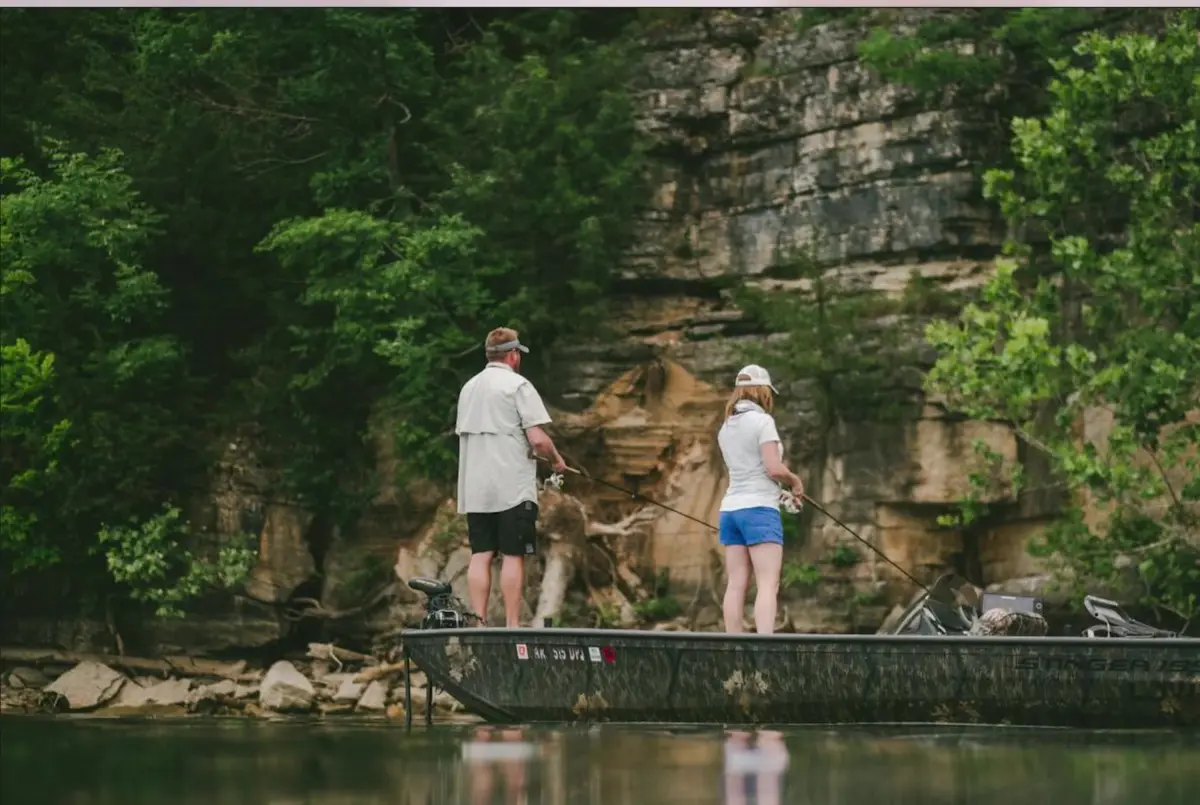
Northwest Arkansas is about four degrees cooler than Tulsa in July, not ten — and the reason is elevation, not trees. In this video I said Tulsa "is about 10 degrees more than Northwest Arkansas," and then offered a theory I explicitly flagged as unsourced: "I don't have scientific data why, but my theory is that we have so many trees here in Northwest Arkansas that it just keeps everything much cooler temperature-wise versus Tulsa. Tulsa doesn't have as many trees, it's more deserty, drier out there."
I appreciate past-me for saying "I don't have scientific data." Here's the data.
The actual answer
Per National Weather Service 1991–2020 normals, Tulsa's normal July high is 93.6°F. Fayetteville's is 89.2°F. That's a gap of about 4.4 degrees — real, noticeable, and less than half of what I claimed.
The "more deserty, drier" part is backwards. Tulsa averages roughly 43 inches of precipitation a year. Fayetteville averages about 46 to 47. We are the wetter of the two. Both are humid subtropical climates and neither is remotely desert.
The mechanism I missed is sitting right under us. Fayetteville is at roughly 1,378 feet. Tulsa is at about 722 feet. That's a 656-foot difference, and at the standard atmospheric lapse rate of about 3.5°F per 1,000 feet, elevation alone accounts for roughly 2.3 degrees — call it half the gap, and more than half if you use a steeper lapse rate. We're up on the Ozark Plateau and they're down in the river valley. That's the answer.
Latitude, which might have seemed like a candidate, is a non-factor: Tulsa is at about 36.15°N and Fayetteville at about 36.06°N. Same line, essentially.
Does the tree theory have anything to it?
Some, and I want to be fair to my own instinct here rather than just dunk on it.
Urban tree canopy cooling is real and measured. Peer-reviewed studies put the effect somewhere around 0.8 to 1.5°C — call it 1.4 to 2.7°F — comparing heavily canopied areas to bare ones. A Washington, D.C. study measuring 5% canopy against 90% canopy found about 1.8°C of afternoon cooling.
So trees do cool places. Two problems with using it here. First, the effect size is at most comparable to elevation and probably smaller, so it can't be the main driver. Second, I never checked whether we actually have more canopy than Tulsa. Tulsa's citywide canopy runs around 26% and has a 30% target; I couldn't find a published Fayetteville or Bentonville figure to compare it to.
What I can say, and it's a nice fact I didn't know: Arkansas ranks first for urban tree canopy percentage among all states west of the Mississippi. So the intuition that this is an unusually green place is correct. It just isn't why Tulsa is hotter.
The hang gliding is real, in a different place
I said there's hang gliding "a little further south down by" a place my audio renders as something like Mena. Wherever I meant, Arkansas's established hang gliding sites are Mount Magazine State Park — the state's highest point at 2,753 feet — and Mount Nebo State Park near Dardanelle, which has two bluff-top launches at around 1,770 feet and has hosted fly-ins since 1975.
Mena is a different direction entirely, and Queen Wilhelmina isn't listed as an active launch site. Mount Nebo is roughly a two-hour drive from Fayetteville. Real activity, and I pointed at the wrong mountain.
"Still a hidden gem" — this one has expired
This was reason number three in my video, and I predicted it would hold: "it's going to be a long time before Bentonville, Arkansas or Northwest Arkansas becomes a word of the table, so to speak."
To be fair to the segment, I wasn't entirely straight-faced about it — I followed that with a joke about telling only "the people you want to be around" and telling everyone else "it's not a good place." So this was half a brag and half a bit. But the prediction underneath it was sincere, and it's the part that hasn't aged. In a single year, Bentonville appeared on the New York Times' 52 Places to Go in 2026, Condé Nast Traveler's Best Places to Go in 2026, and Travel + Leisure's 50 Best Places to Travel in 2026. Three of the biggest national travel lists, same year.
The visitation numbers say the same thing. Crystal Bridges draws in the neighborhood of 800,000 visitors a year. Northwest Arkansas National Airport set a record with 1.15 million enplanements in 2024, up 16% — enplanements count departing passengers only. On the total-passenger measure, which counts arrivals too, the airport moved 2.52 million in 2025 against 2.29 million the year before, with 2026 pacing to break that again.
None of that looks like a secret. The honest version is that Northwest Arkansas was a hidden gem and is being actively discovered right now, which is a different pitch — and frankly a more urgent one if you were waiting.
That also complicates the argument I called "controlled growth" — a term I flagged on camera as one I'd made up myself — which depends on the stigma keeping people out. It's holding up less well every year that three travel magazines put us on the cover.
The growth numbers, properly compared
I said "usually about 35 people per day" here versus "a couple hundred per day" in Dallas, and used it to argue we're growing slowly.
The Dallas comparison holds up well. Dallas–Fort Worth adds roughly 200 people a day from net migration — almost exactly the "couple hundred" I said — and about 339 a day counting natural increase too. Phoenix runs about 162 a day, Austin about 159.
Northwest Arkansas is around 40 a day on the Northwest Arkansas Council's current figure, up a little from the 35 I quoted. So in absolute terms, yes, pebbles.
But here's the comparison I should have made. Northwest Arkansas grew about 13.8% between 2020 and 2025, from roughly 546,725 to 622,177 people, which made it the ninth-fastest-growing metro in the United States by rate — the first time it's cracked the top ten in at least five years. Nashville over a comparable stretch grew about 6.4%.
We are not growing slowly. We're growing fast from a small base. Those feel identical when you're driving around and they are completely different when you're pricing a house.
The prices I quoted, scored
I date-stamped this myself, which makes it easy to grade: I said "you could easily find a brand new new construction home all the way from 275," then immediately revised to "325 would be a more realistic option, at the moment of recording in late 2024."
The revision was the right call and it has aged decently. Entry-level new construction in the outer suburbs still exists in that neighborhood — I'm seeing new construction starting around $229,500 in Centerton and in the $330,000s in parts of Bentonville from the volume builders.
But the caveat I gave on camera has gotten much more important. I said "if you want to move to downtown Bentonville, boy howdy does that cost some money," and that the outskirts are where the value is. That gap has widened. Many Bentonville communities now start north of $465,000. Benton County's overall average sale price was $465,888 in the first half of 2026 and Washington County's was $423,750.
So $275,000 is not gone, but it has migrated. In late 2024 it was an entry price for the region. In 2026 it's an entry price for specific outer-ring cities — Centerton, Cave Springs, Prairie Grove, Pea Ridge — and not for Bentonville at all.
One small name
I listed "Greenville, North Carolina" among well-known boom destinations alongside Dallas, Austin and Florida. The Greenville people mean in that sentence is Greenville, South Carolina, in the Upstate — a metro that recently passed a million residents and shows up constantly on relocation lists.
Greenville, North Carolina is a real and separate city, home to East Carolina University, and it isn't part of that conversation. Easy slip, worth fixing, because someone comparison-shopping metros would end up researching the wrong place.
What I'd keep
The claim that we don't get extremely hot holds up in relative terms — 89°F as a normal July high is genuinely cooler than Tulsa, and much cooler than most of Texas and Oklahoma. I couldn't retrieve an authoritative count of days at or above 90°F for this area, so I'm not going to give you a number for that.
And the core argument of the video — that you can be outside here most of the year without either freezing or cooking — survives everything above. It just survives because of where the Ozark Plateau sits, not because of the trees.