Arkansas's Medical Research Powerhouse Is in Little Rock
Author
Phillip Shepard
Date Published
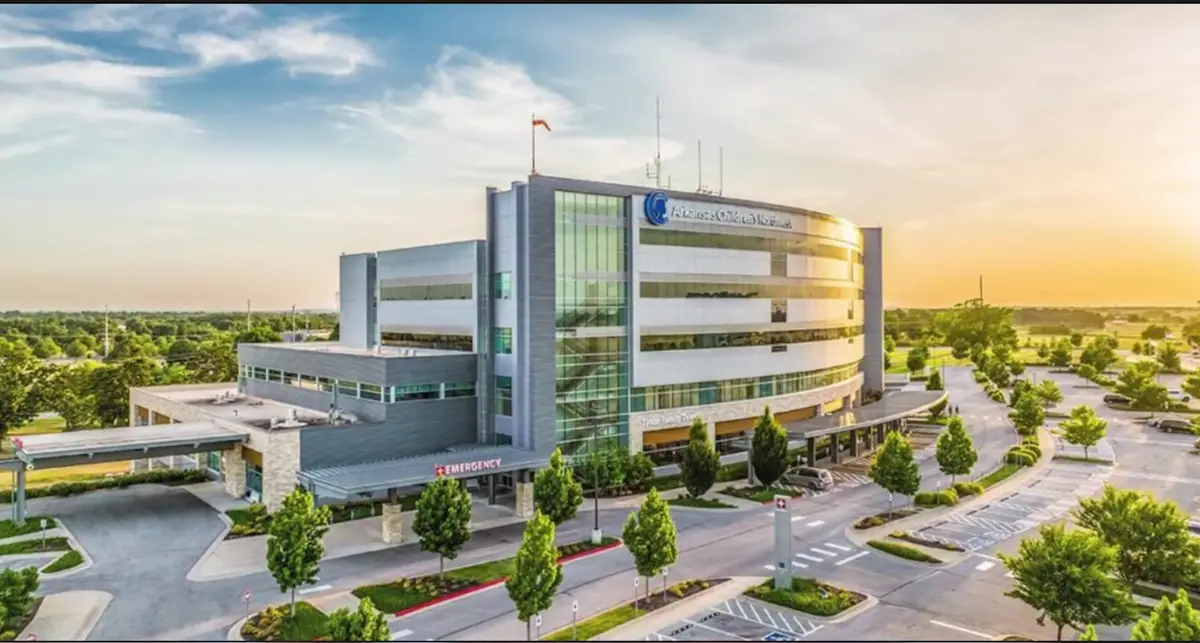
Arkansas's medical research powerhouse is in Little Rock, not Fayetteville. I said "the University of Arkansas probably has at the moment the best, when it comes to Arkansas, the best medical research facility here." That confuses two separate institutions, and the distinction matters if you're trying to figure out where to get complex care.
U of A Fayetteville and UAMS are different schools
The University of Arkansas for Medical Sciences — UAMS — is in Little Rock. It's the state's only academic health sciences university and its only academic medical center: colleges of medicine, nursing, pharmacy, health professions and public health, a hospital, and seven institutes including the Winthrop P. Rockefeller Cancer Institute and the Jackson T. Stephens Spine and Neurosciences Institute.
The University of Arkansas in Fayetteville is a separate campus in the same system. Its biomedical work is real but much smaller and engineering-flavored — a Department of Biomedical Engineering doing biomaterials, imaging and tissue engineering, and the Institute for Nanoscience and Engineering, which has reported roughly $15 million in federal grants over ten years.
The research gap isn't close. UAMS has run in the range of $142.8 million in total research funding with about $69.3 million from the National Institutes of Health, and $70 to $75 million a year from NIH in recent years, including a five-year, $24.2 million NIH clinical and translational science award.
One thing I should have mentioned: UAMS has a Northwest Arkansas campus in Fayetteville. UAMS Northwest hosts clinical rotations, regional residency training and community research. So UAMS is here — it just isn't the Fayetteville flagship.
The "trifecta" was right, with the wrong university
I said that "when they work with the actual university, they work directly with Washington Regional as well as the VA hospital in the area." The relationship is real and better documented than I made it sound. I just named the wrong school.
The VA facility is the Veterans Health Care System of the Ozarks, anchored by the Fayetteville VA Medical Center, with seven community-based outpatient clinics across Arkansas, Missouri and Oklahoma, serving veterans in 22 counties. It lists academic affiliations with UAMS residency programs and sits on the Northwest Arkansas Council's healthcare steering committee.
Washington Regional's teaching role is newer and more substantial than I knew: there's a UAMS/Washington Regional Graduate Medical Education program. The first internal medicine residents arrived in summer 2023, and in 2025 the partnership received initial accreditation for neurology and emergency medicine residencies.
So the trifecta is UAMS, Washington Regional and the Fayetteville VA — with the Council convening. Same shape, right names.
The hospitals existed. The specialty depth didn't.
I said that "about 10, 15 years ago healthcare in Northwest Arkansas [was] not existent, didn't really happen."
Washington Regional opened in 1950 as Washington County Hospital, a 50-bed facility in Fayetteville. Its current campus opened in 2002 and is licensed for 425 beds across more than 724,000 square feet, with major expansions in 2016, 2017 and 2019.
Mercy traces to Rogers Memorial Hospital, which opened in September 1950. The Dominican Sisters took it over in 1951, it became St. Mary's-Rogers Memorial in 1979, and it joined the Sisters of Mercy Health System in 1995. Mercy Northwest Arkansas marked its 75th anniversary in September 2025.
Northwest Medical Center was operating in Springdale and Bentonville, and the VA was here too. In 2010 through 2015 this region had multiple full-service hospitals, one of them in a decade-old modern campus.
Here's the version of my claim that's actually true and actually interesting. Northwest Arkansas had hospitals. What it lacked was specialty and subspecialty depth, a medical school, and any graduate medical education. That's a specific, defensible statement — and it's the thing that changed.
What changed since roughly 2015: Arkansas Children's Northwest opened in 2018, the region's first residency programs began in 2023, and the Alice L. Walton School of Medicine enrolled its first class in 2025. Facility investment ran about $529.5 million from 2018 to 2023, including Mercy's roughly $277 million expansion and Washington Regional's $217 million.
The number I should have led with
I never gave a figure for the problem this is all solving. Here it is, from the Northwest Arkansas Council's own commissioned research:
As of the Council's 2019 assessment, about $950 million a year was leaving this region as residents traveled elsewhere for care. That included 5,840 annual hospital stays outside Northwest Arkansas for advanced cancer care alone, averaging around $37,000 each.
The supporting numbers are just as concrete. The average age of a specialty-care physician here was 58, meaning recruiting mostly replaced retirees rather than adding capacity. The region had 23 cardiologists in 2018 and needed roughly 8.5 more for the population it already had. It had 3,490 registered nurses against 4,450 in Evansville, Indiana — a smaller metro. All three counties are federally designated Health Professional Shortage Areas for primary care, mental health and dental.
By 2023, per the follow-up report, that figure had fallen to about $695 million. That's the transformation, measured. It's a far better argument than anything I made on camera.
What the Council actually committed to
I said "the Northwest Arkansas Council has committed to radically change healthcare and medical care in Northwest Arkansas by 2030."
The real thing: the Council created a Health Care Transformation Division in 2019, and the 2030 language comes from a report — Northwest Arkansas Health Care Vision 2030: Continuing the Transformation — published on November 13, 2024 with the Heartland Whole Health Institute. Its four goals are payment reform, expanded specialty services, workforce growth through graduate medical education, and collaborative research.
That's a roadmap, not a binding commitment, and the distinction is real. The Council is a 501(c)(6) business league that describes itself as a convener. It cannot regulate, license, permit, set prices or employ anyone. Its actual levers are convening institutions, commissioning studies, advocacy, physician recruitment support, and helping stand up residency programs. Everything else is done by Mercy, Washington Regional, Northwest Health, Arkansas Children's, UAMS and Walton philanthropy.
The projections are worth knowing: the report puts the regional healthcare sector at $6.1 billion by 2030, 144% growth, with nearly $2 billion in investment across 2018 to 2030.
Price transparency: already federal law, and Arkansas hospitals are struggling with it
I said the Council would bring "transparent pricing for all medical here" and that "they 100% can, because they have the influence and the connections."
Price transparency isn't among the four published goals. But the bigger problem is that I presented it as a novel regional ambition when it's already been federally required since January 1, 2021. The CMS Hospital Price Transparency Rule requires hospitals to post machine-readable standard charge files and a consumer-friendly display, and a February 2025 executive order ordered stronger enforcement and actual prices rather than estimates.
The gap isn't the rule, it's compliance. Three separate bodies have measured it, using different samples and different standards, so the numbers aren't directly comparable — but all three point the same direction. One advocacy group found only about 21% of hospitals fully compliant as of November 2024. A 2025 federal inspector general review found 37% of sampled hospitals failed at least one requirement. And CMS had reviewed about 3,764 hospitals by June 30, 2025, with 65% receiving at least one warning or corrective action request.
And nine Arkansas hospitals were cited in the 2025 federal enforcement push. Arkansas hasn't passed its own comprehensive transparency statute; it penalizes noncompliance with the federal rule. One study found genuinely accessible price comparison tools at only about a third of Arkansas hospitals.
So the honest version: you already have a legal right to hospital prices. The useful local question isn't whether someone will grant it, it's whether your hospital is complying — and that's checkable.
The salary claim was mine, not anyone's plan
I said "they are going to definitely increase the salaries of everyone moving to the area, whether it's nurses or doctors or pediatricians."
No such increase has been announced, and the Council couldn't announce one — it doesn't employ clinicians. I stated an inference as a fact.
The underlying situation is worth stating plainly, because it cuts against my optimism. Arkansas registered nurses average somewhere around $81,520 against a national average near $91,325 — roughly 11% below, near the bottom nationally. A 2023 study commissioned by the Arkansas Hospital Association found a shortfall of about 9,000 registered nurses statewide. The state granted $20 million in 2024 to expand the nursing pipeline.
Pay may well rise. Nobody has promised it.
The retention guess — and why the real answer is residencies
I speculated that free tuition at the medical school would come with "an incentive structure to stay in the area." I flagged it as a guess and it should stay one: the school's published terms say only that tuition is waived for the first five cohorts, at a value around $69,650 a year. There's no service obligation, no requirement to practice in Arkansas, no payback clause.
Here's what I find genuinely interesting, and it reframes the whole segment. Residency location predicts where a physician practices far better than medical school location does. Roughly 57% of residents who completed training from 2011 to 2020 stayed in the state where they did residency, and a more recent cut puts it near 59%.
Which is exactly why the Council's real work is graduate medical education. The 2019 report recommended adding 200 residency slots and assumed about 75% of residency graduates would stay in-region. The medical school gets the headlines. The residency programs at Washington Regional are the mechanism.
Two smaller items
Mercy's technology
Mercy Northwest Arkansas in Rogers does use robotic surgical technology — robotic spinal-fusion guidance, voice-controlled robotic digital microscopes for neurosurgery, and what was reported as Arkansas's first robotic C-arm at its Heart and Vascular Center, alongside a $277 million expansion adding around 150 beds. I couldn't confirm which specific surgical robot platform is in Rogers, so I won't name one.
On AI, Mercy has a multi-year Microsoft agreement and in November 2025 announced co-developing ambient AI for nurses inside Microsoft Dragon Copilot. That rollout started in St. Louis, Springfield and Fort Smith — Rogers wasn't named in the initial deployment. More than 1,000 Mercy physicians use the tool.
One correction to my framing: I said robotic surgery is "becoming more commonplace." Nationally it's already standard in several specialties — around 87% of US prostatectomies were robot-assisted as of 2019, and about 61% of hysterectomies as of 2018. It's not emerging. It arrived.
Patents
I said the university does "hold on to a lot of patents that gives funding back to university." The University of Arkansas does run a technology transfer office and reported a record 47 invention disclosures and 54 patent applications in fiscal 2019. I'll also give myself credit for the one place I marked my own limit in this video — "do I know exactly what they're researching? No" — because that instinct should have extended to the patents claim too. I couldn't get licensing revenue figures, and for the great majority of American universities licensing income is a small line item rather than a funding pillar — often largely consumed by patent costs and inventor shares. I'd drop the implication that patents meaningfully fund the university unless someone can show me the number.