Why Pea Ridge Is NWA's Best-Run Small City
Author
Phillip Shepard
Date Published
The Waltons Gave This Tiny Town Free Land. Here's Why
Pea Ridge opened a sewer plant in 2021 sized for 30,000 people — several times its current population — and that decision is a big part of why the city has kept approving new development while some neighbors have run into capacity limits. It is the least glamorous advantage in Northwest Arkansas and probably the most valuable. Add a Walton-funded BMX park, deliberate choices about housing density and a highway realignment, and Pea Ridge is quietly running one of the better-managed playbooks in the region.
1. The Sewer System Nobody Talks About
Most cities in the region did not build sewer capacity ahead of their growth. Pea Ridge did. Its 2021 treatment plant was sized well beyond the town it served, with a further expansion already pencilled in for the early 2030s, and the city is now upgrading the Easterling Lift Station — work expected to finish by January 2027.
This sounds like the dullest possible topic and it is the reason everything else on this list is possible. Without lift stations and treatment capacity, you cannot approve subdivisions and you cannot grow. Centerton, Gravette and Highfill have all run into that wall; Benton County has not approved new wastewater projects in Centerton since May 2024.
Mayor Nathan See has also been unusually open about it, posting a video tour walking residents through the city's infrastructure work. More mayors should do this.
The other half of the equation is location. Pea Ridge sits about 15 minutes from downtown Bentonville, essentially one road away, with easy access to Interstate 49 — and homes cost considerably less.
2. A World-Class BMX Park, on Donated Land
Pea Ridge is getting a BMX park designed with input from Shane Fernandez, the president and chairman of USA BMX, who presented the proposal to the city council.
The land came from the Walton Family Foundation, which bought it and gave it to the city. That is the reverse of the usual arrangement, where a city provides land to attract a developer. Funding has come together through a state outdoor recreation grant of $250,000 for the connecting trail plus a zero-interest loan from the foundation.
The plan pairs the BMX track with a connector trail linking Baker-Hayes Park to the track and on to City Park, with longer-term ambitions to tie into the wider regional network. There is not really a comparable BMX facility in this part of Arkansas — the closest analogue is the pump track at Railyard Park by Lake Atalanta in Rogers, which is a drive away. In a region where cycling is the defining outdoor activity, a purpose-built BMX facility is a genuine draw.
3. Saying No to Wall-to-Wall Single-Family Homes
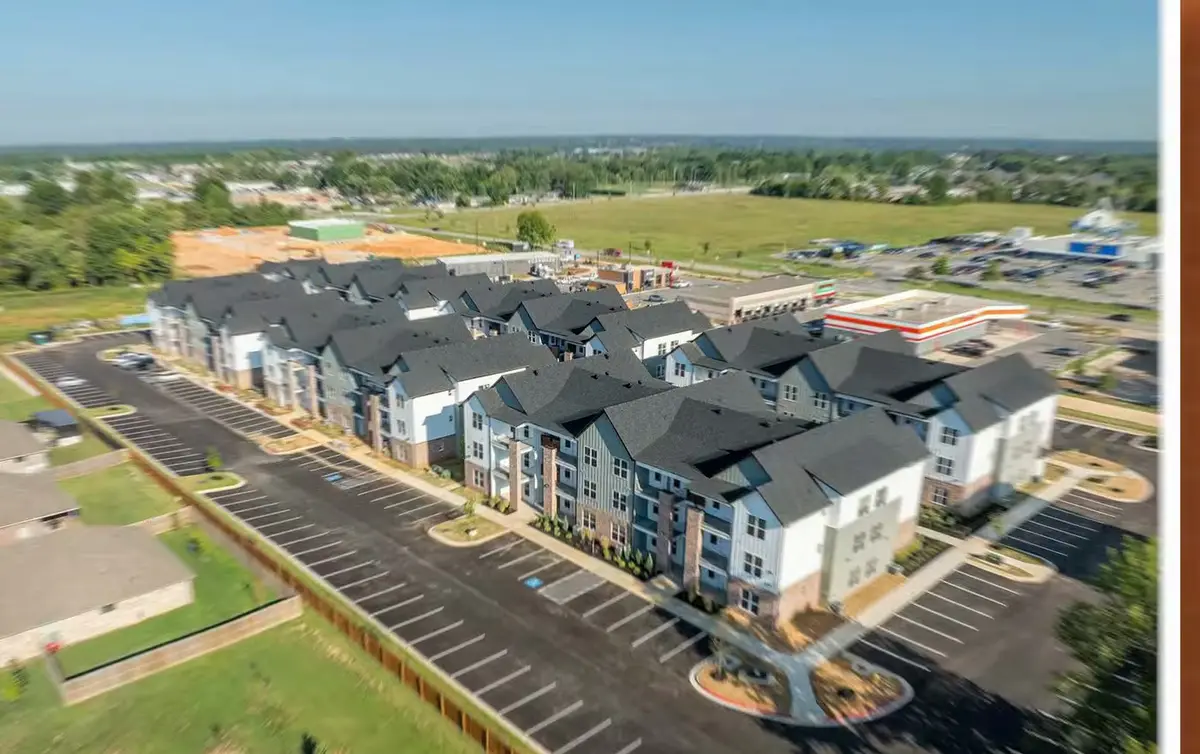
This may be the item that matters most for anyone buying here. Pea Ridge has been approving rezonings that allow higher density rather than approving more of the same detached housing — including the Village at City Park, a mixed development of townhomes and apartments. Not everyone is happy about it; a residents' coalition has pushed back.
The case for it is practical. Detached homes on large lots require more road, more fire coverage and more of every service the city has to fund and maintain. Spread far enough, all of that costs a city more than it can comfortably carry.
There is also a demand argument. Plenty of people moving to NWA want a townhouse or a condo rather than half an acre. The city council has been steering specific areas toward that instead of approving sprawl by default.
Pea Ridge will likely always be a bedroom community, and that is fine. But it is making these calls before the problem arrives rather than after.
4. Rethinking How the Highway Runs Through Town
The fourth piece is roads. Pea Ridge, Benton County and ARDOT have been reworking the highway network around the city — a swap between Highways 72 and 94 that changes which routes carry state traffic, with roundabouts planned. The intent, as the video frames it, is to keep through-traffic out of the town centre.
The model is Prairie Grove, which opened a Highway 62 bypass in 2014 and rerouted through-traffic around its downtown. The old route became 62B and now carries mostly local traffic, while the bypass takes roughly double the volume.
That distinction has real consequences for property values and for whether local retail can survive. Through-traffic makes a downtown loud and hard to walk without adding customers.
What ties all four together is that Pea Ridge appears to have watched what went wrong in neighbouring cities and deliberately chosen not to repeat it. Sewer capacity ahead of growth, donated parkland, density where it makes sense, and traffic steered away from the places people gather — they saw the issues elsewhere in the region and decided not to follow.