The Worst Things About Northwest Arkansas
Author
Phillip Shepard
Date Published
The Worst Things About Northwest Arkansas
I made a video about three things this region fails at. A year later, one of those three does not hold up at all — and it is the one where being wrong actually costs somebody money. So I am going to take them in reverse order and put the real correction first.
The public transportation section was wrong
I said Northwest Arkansas has "no intention of ever doing any sort of public transportation at scale whatsoever." I said "there are like very few buses, very few buses, very few buses." I said that for regular people going to work, transit here is "non-existent."
That is not true, and I want to be specific about how not true it is.
Ozark Regional Transit runs 13 fixed routes across Fayetteville, Springdale, Rogers and Bentonville. The fixed routes are free to ride — zero fare — funded through the cities and the Walton Family Foundation. ORT also runs an on-demand microtransit service at $1.25 a ride, bookable in the Citymapper app, with zones in all four cities. That on-demand service has tripled in use and has been adding buses to keep up.
Razorback Transit runs 19 routes, and here is the part I got most wrong: it is open to the general public, not just students. Also fare-free. It carried 1,316,859 riders in fiscal 2024, and preliminary 2025 numbers were up another 14.5 percent.
Put together, this region logs well over a million transit rides a year on a system that costs most riders nothing.
I was right about one thing: there is no commuter rail. The Arkansas and Missouri Railroad runs excursion trains out of Springdale on vintage coaches, and that is tourism, not transportation.
Why this correction matters more than the others. If you are moving here on a tight budget, or you are older and thinking about the day you stop driving, or you have one car and two working adults, the difference between "non-existent" and "13 free routes plus 19 more" is the difference between needing a second car and not. I told people this region has nothing. Somebody may have budgeted a car payment around that. Go look at the route maps before you do.
The honest version of my complaint still stands: coverage and frequency are thin for a metro this size and growing this fast, and there is no high-capacity spine. That is a real critique. "Non-existent" was not.
I was also unfair to my own argument in one direction. I framed the trail spending as the reason transit got skipped, and presented that as a defensible trade-off. The trail investment is real — the Walton Family Foundation has put roughly $74 million into 163 miles of trails, including about $38 million for the Razorback Regional Greenway, and the region now has around 562 miles of singletrack and 204 miles of paved path. Cycling generates an estimated $137 million a year in regional economic benefit. But building trails and running buses are not the same budget, and the buses are running. The trail choice is defensible on its own terms. It does not explain why I thought the bus service was not there.
The infrastructure section was half right
My actual complaint — that planners should have been thinking about 2050 fifteen years ago — was based on a premise I did not check.
I said serious long-range planning only started "in the last like 2 to 3 years." The Northwest Arkansas Regional Planning Commission was established in 1966 and began long-range transportation planning around 1970, on work that fed into what became Interstate 49 and Highway 412. It has been the region's federally designated Metropolitan Planning Organization since 1983, producing 25-year plans on a rolling cycle ever since — a 2040 plan, a 2045 plan adopted in March 2021, and now Forward 2050, which went out for public comment over last winter.
So the plans I was asking for have existed for forty years. What is new is this particular one, not the practice.
To be fair to my own point: I hedged on camera that I was not sure about ARDOT budgets, and I said outright that the roads themselves are good. That part checks out. Mean commute time across the metro is about 21.6 minutes, against a national average nearer 26 or 27 minutes.
The healthcare section mostly held up
This is the section where I expected to be walking things back, and mostly I am not. Two claims in particular needed checking, and both survived.
I said Northwest Arkansas is "partnering with Cleveland Clinic" and "partnering with Mayo Clinic." Both are real. The Cleveland Clinic relationship is a 30-year, $700 million affiliation announced in September 2024 among the Alice L. Walton Foundation, Mercy, Heartland Whole Health Institute and Cleveland Clinic, centered on cardiovascular care — including a co-branded cardiac Center of Excellence on Mercy's Rogers campus, with $350 million from Mercy. If anything I undersold it.
The Mayo relationship is narrower and worth stating precisely: Northwest Health joined the Mayo Clinic Care Network in April 2018. That gives local physicians access to Mayo e-consults, second opinions and educational resources. It is not a Mayo campus here.
The rest of the buildout is real. The Alice L. Walton School of Medicine opened in Bentonville in July 2025 with an inaugural class of 48 and preliminary LCME accreditation. Heartland Whole Health Institute's 85,000-square-foot building opened on the Crystal Bridges campus in May 2025. The Walton hospital I mentioned is the Bentonville Health Care Campus on about 100 acres near I-49, targeting late 2028.
On my "5 to 7 years" timeline — I applied that to the region being "very close to world class," not to any one building. Two years in, the medical school and the institute are open and the hospital is still two years out. That prediction is still running, and I would not call it either way yet.
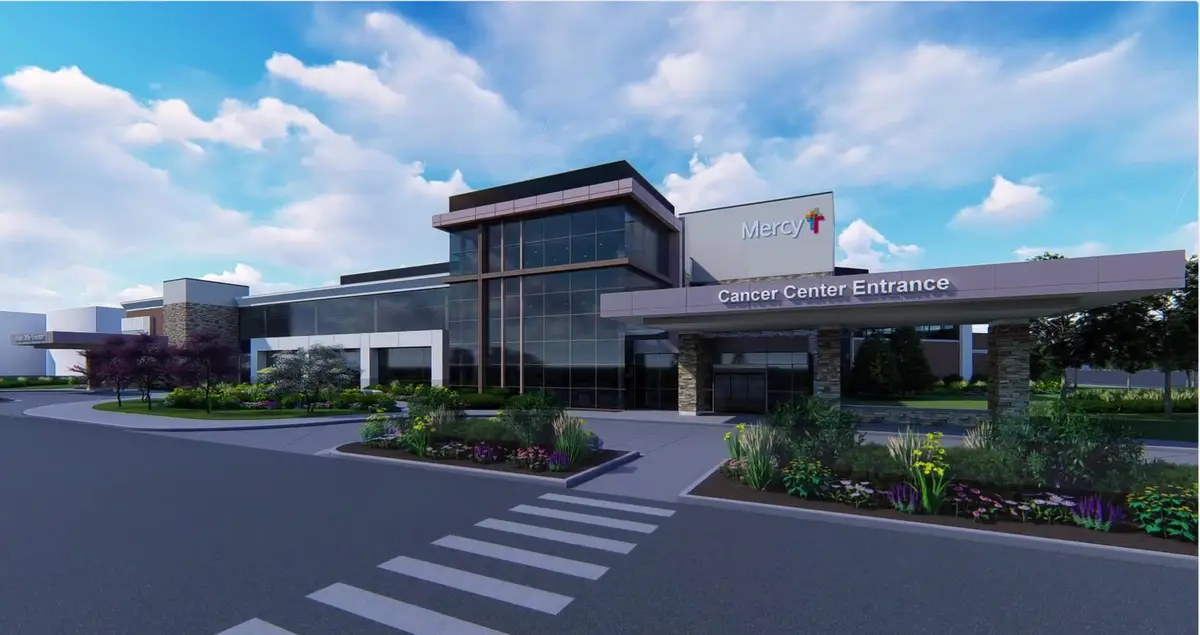
One thing to soften. I said there are "brand new cancer research centers being developed." What is actually being built is expanded cancer treatment capacity — Highlands Oncology has 51 acres in Rogers for a roughly 125,000-square-foot cancer center. The state's cancer research institute, the Winthrop P. Rockefeller Cancer Institute, is in Little Rock. Treatment capacity is the thing that matters if you get sick here. It is not the same as a research center, and I should not have used that word.
And one thing to correct about Arkansas as a whole. I called the state's healthcare system "horse garbage, the worst." Arkansas ranks 48th of 51 on the Commonwealth Fund's 2025 state scorecard and 49th of 50 on America's Health Rankings. Bottom five, not last.
More importantly, I said the good news is that Northwest Arkansas is a bright spot within a bad state, and the county data backs that up harder than I knew. Benton County has been ranked the healthiest county in Arkansas three years running. Roughly 17 percent of Benton County residents and 22 percent of Washington County residents report fair or poor health, against 23 percent statewide.
The one place the region does share the state's problem: Benton County actually has fewer primary care physicians, mental health providers and dentists per resident than the Arkansas average. Outcomes here are good. Access to a provider is the thing still catching up — which is exactly what a medical school and a wave of residencies are meant to fix.