Nobody Negotiates Your Airfare at XNA
Author
Phillip Shepard
Date Published
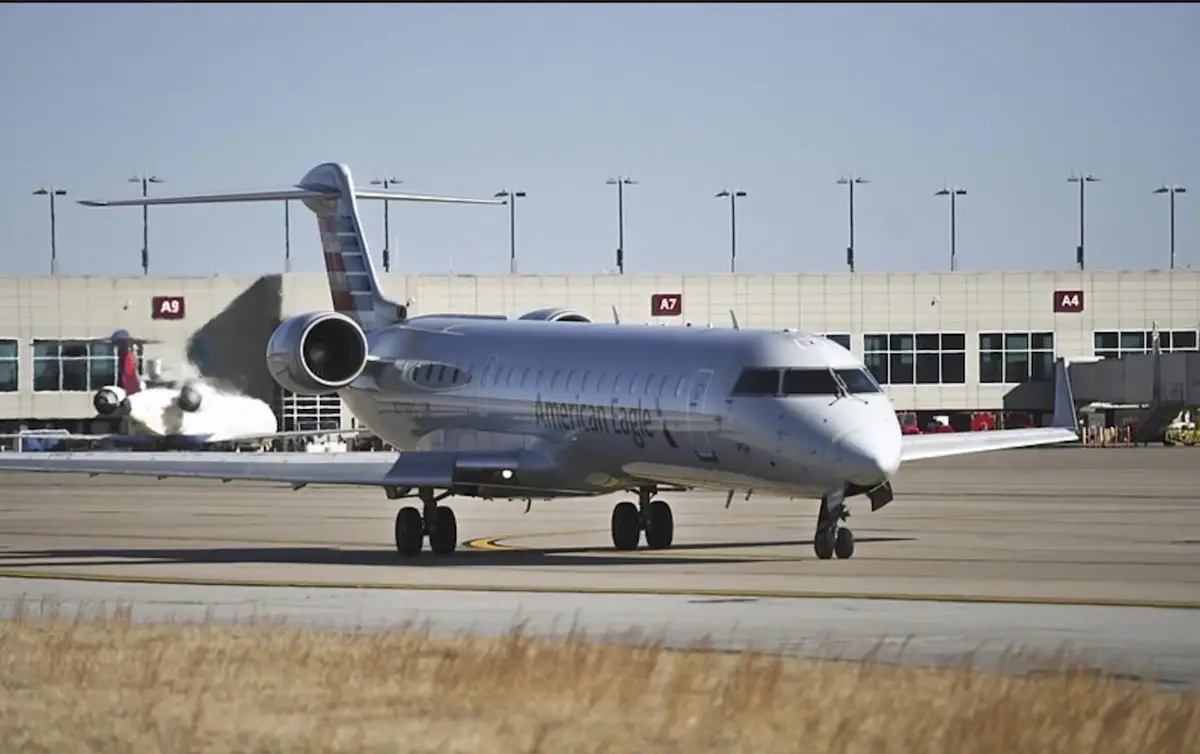
XNA fares run above the national average, not below it. In this video I said the opposite, and gave a mechanism for it: "the Northwest Arkansas Council, which is kind of the overseeing Council of the area, steps in and negotiates very good fares with these airlines, so we actually get really affordable airfares."
Both halves need work. Nobody negotiates consumer fares, and the best available figures put ours above average rather than below.
What the Council actually does
Airlines set fares through their own revenue-management systems. A regional council has no seat at that table and never has.
What the Council does is air service development — making a route financially safe enough for a carrier to try. The tools are concrete and public:
- Minimum revenue guarantees. The Council pledged $100,000 in cash toward an MRG for San Francisco service, part of a $500,000 package for Breeze Airways nonstops.
- Incentive programs. XNA has offered $40,000 per weekly frequency — up to $280,000 in marketing support for a year of daily service, plus a two-year landing-fee waiver worth up to $400,000, targeting nine cities with San Francisco, Seattle, Boston and Austin as priorities.
That's subsidizing whether a route exists. It is not negotiating what you pay for a seat on it.
And the fares themselves
The average roundtrip domestic fare at XNA was about $508 in the second quarter of 2025. The US national average for 2025 ran near $387.
Read those two numbers carefully, because they aren't a clean comparison: one is a single quarter and the other is a full year. The gap is directional, not precise, and anyone quoting it should say so. What I can say is that a roughly $120 spread is too wide to be explained by the period mismatch alone.
For what it's worth on trend, XNA averaged $484 in the third quarter of 2022, up $26 from the same quarter in 2019 — though that compares XNA to its own past, not to the country.
And here's the context I skipped. The Council runs a fare-focused campaign called FareFlight NWA, which publishes fare data and tracks XNA against comparable airports.
Look at how it frames its wins: XNA is now within $38 of Tulsa and within $10 of Little Rock, with travelers "saving $12.5 million" in one quarter relative to prior pricing. Those are improvements measured against XNA's own past and against two other regional airports — not claims of being cheap. (Those figures come from the Council's own site, so they're the Council's presentation of its own performance, though the underlying data is federal.)
The accurate version: the Council's work has made XNA far better connected and less expensive than it used to be. It has not made it cheap. Fares here run above the national average, which is normal for a mid-size airport with heavy business travel and little low-cost-carrier competition. Walmart supplier traffic is inelastic demand, and inelastic demand is exactly what holds fares up.
Drake Field is in Fayetteville
I said: "there's a privatized field called Drake Field over kind of near the downtown section of Bentonville, it's owned by the Waltons."
Wrong city, wrong owner, wrong ownership model.
Drake Field — officially Fayetteville Executive Airport at Drake Field — is in Fayetteville, about four miles south of downtown Fayetteville and roughly thirty miles from Bentonville. It's city-owned and city-operated by Fayetteville's Aviation Division. It's named for Dr. Noah Drake, a University of Arkansas geology professor who donated $3,500 in 1929 to buy the land; the field was formally named for him in April 1947.
The airport I was describing is Thaden Field — Bentonville Municipal Airport, officially Louise M. Thaden Field. Also city-owned and public-use, not privatized. Steuart Walton has been the driving force behind turning it into an aviation hub, so the Walton association is real at the investment and tenant level — the field itself is municipal.
It's named for Louise Thaden, a Bentonville native who, with co-pilot Blanche Noyes, was the first woman to win the Bendix Trophy. That's a better piece of local history than anything I offered.
Game Composites is at Thaden, not Drake. The company is real and my description of it was roughly right — founded in 2013 by Steuart Walton and Philipp Steinbach, it builds the GB1 GameBird, a two-seat carbon-fiber aerobatic aircraft, and holds both an FAA type certificate and a production certificate for it. The Bentonville facility does composite manufacturing, paint, final assembly, design, analysis and tooling.
So "a Walton-backed aircraft manufacturer builds planes here" was true. I just put it at the wrong airport, thirty miles away, and invented a private ownership structure for a municipal field.
The restaurant checks out. I said "there's actually a nice restaurant there." It's LOUISE, an all-day cafe in the Thaden Fieldhouse overlooking the runway, run in partnership with the Indigo Road Hospitality Group. Its signature item is called the "$100 Burger," which is an aviation joke about the cost of flying somewhere for lunch.
The UP.Summit
I got the shape of this right and one detail wrong.
It's UP.Summit, organized by UP.Partners and co-hosted by Tom and Steuart Walton, Ross Perot Jr. and Phillip Sarofim. It's an annual invitation-only gathering on the future of transportation and mobility.
The Texas venue is Fort Worth, not Dallas — specifically Perot Field Fort Worth Alliance Airport, which is why Perot is a co-host. The 2026 edition is scheduled there around October 11.
I said it "balances itself between going from one year to Bentonville, the other year to Dallas." Fort Worth rather than Dallas, and I'd soften the strict every-other-year framing — it has been held in both places, but I didn't verify a rigid alternation.
The two-track structure I described is real. There's a genuinely public, free, family-oriented Community Day — held at Bentonville Municipal Airport in the Bentonville years, showing autonomous vehicles, drones and space tech, with an education mission — alongside the invitation-only summit.
One thing I'd soften. I said the summit side shows "some of the highest almost military grade technology." I hedged it immediately — "are they actually showing like the most secret stuff, obviously not" — which was the right instinct. I'd just drop the framing entirely rather than hedge it, since I have no idea what's demonstrated behind closed doors and neither does anyone who isn't invited.
XNA, and a number I've been getting wrong
On nonstops I've improved. I said "almost 30 locations in America just for direct flights." XNA serves 27 nonstop destinations, going to 28 when United's Newark route starts in September 2026, across six airlines. That's close.
Worth flagging because in an earlier video I said 35, which I've corrected separately. "Almost 30" is the accurate version and I'd like credit for having drifted toward the truth.
On enplanements, I defined the word wrong. I said XNA was expected to hit about a million enplanements, "meaning a million people have gone back and forth on flights."
Enplanements count departing passengers only — not round trips, not arrivals. The real figures: XNA set a record 1.15 million enplanements in 2024, up 16%. On total passengers, which counts arrivals too, it moved 2.52 million in 2025 against 2.29 million the year before.
So my instinct that the number was climbing past expectations was right. My gloss on what it measures was not — describing a million enplanements as a million people going "back and forth" implies about two million passenger movements, which runs ahead of what that number actually counts.
On the runway speculation — I said "I'm sure in the near future they're going to be adding different runways to XNA, they're going to make it bigger runways so that certain airlines, Southwest, can eventually make their way here." I hedged that with "I'm sure" and "in the near future," which at least marks it as a guess. I didn't verify any funded runway extension, so it stays a guess.
The haunted hotel
I said the Crescent Hotel in Eureka Springs "is being nominated for the best haunted hotel in America," and that the whole thing was funny — "I say this all tongue and cheek," "I didn't graduate from haunted school." I'm not going to fact-check my own jokes.
The award is real: USA Today's 10Best Readers' Choice Awards, Best Haunted Hotel category. The nomination I could document was announced in September 2024, and these run on an annual cycle — so if you're watching this later, the vote I was pointing at has closed and there may well be a newer one.
One thing worth being precise about: that's a reader vote poll, which is exactly why I was able to tell people to go vote. It isn't a panel handing down a verdict, and the hotel's reputation rests on something more substantial anyway — roughly twenty-five years of paranormal-TV exposure across seventeen national and international shows, including Ghost Hunters and Ghost Adventures.
The 1886 Crescent Hotel opened May 20, 1886. The same 10Best program has also placed it #3 Best Family Resort two years running, which is a genuinely funny thing to hold alongside the haunted branding.
One geographic note I glossed over: I framed this as happening "in the area." Eureka Springs is in Carroll County, outside the Northwest Arkansas metro proper — about an hour east of Bentonville. Close enough for a weekend, not close enough to call local.